Elastic cords have become an important part of thousands of products we use every day. For example, you can find them in your shoes and bags, from face masks to tents and medical equipment. Even today, garment manufacturing and many other industrial applications rely on elastic cords. However, not all elastic cords are the same; they vary in color, design, stretch, and durability. That’s where many beginners get confused, but you should not. This ultimate guide to elastic cords for industrial and garment manufacturing will help you. I will discuss the types, materials, and uses of elastic cords, as well as how to choose the right ones for your needs. So let’s get started.
엘라스틱 코드란 무엇인가요?
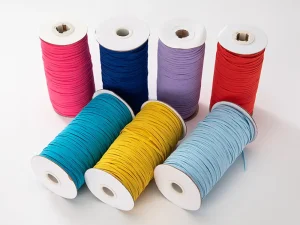
An elastic cord is a flexible, stretchable cord that stretches when pulled and returns to its original shape when the force is removed. It is made with an elastic core and a protective outer covering. These two parts are what actually give it both stretch and strength.
At first glance, when you look at elastic cords, you might feel that they are like a simple rope. But in reality, they provide ultimate comfort and hold several types of garments. As I said above, they have two main parts. The first one is inner elastic. This elastic is responsible for stretching: when you stretch the cord, it expands, and when you let go, it returns to its original shape.
This recovery ability makes it handy in many everyday products and garments. At the same time, there is an outer covering that provides strength to the entire elastic cord. As you know, these cords go through daily washes, rubbing, and stretches. That’s why this outer covering is specifically made with durable materials. Overall, this covering protects the 신축성 있는 코드 during everyday use and helps it last longer.
Some Common Types of Elastic Cords
Elastic cords have a wide range of usability. Different industries use them for different needs. A single elastic cord cannot perform everywhere. That’s why manufacturers make them in different stretch levels, durability, and designs. So let’s dive in and explore different types of elastic cords and their specifications.
1- Braided Elastic Cord
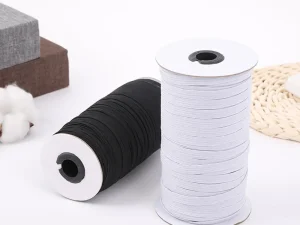
The first common type of elastic cord is a braided one that is known for its extra flexibility and durability. Basically, it is made by weaving or braiding yarns around a stretchable inner core. That inner cord is made with rubber or spandex. The braided outer layer protects the inner layer from wear and gives the cord a finished look. This type of elastic cord is popular for its reliable performance. It provides a good amount of stretch and does not feel too loose or too stiff. That’s why you can use it in backpacks, luggage, camping tents, and sleeping bags.
2- Knitted Elastic Cord
The second common type is a knitted elastic cord that is made by covering a stretchable rubber or spandex core with knitting. In this process, the yarns are joined together in small loops around the elastic core. Because of its knitted outer cover, this type of cord stretches smoothly and gently. When you pull it, it expands easily without feeling too hard or tight. When you let go, it returns to its normal length. Moreover, knitted elastic cords bend easily. It means the cord moves with the fabric instead of resisting it. The risk of forming stress points on the skin decreases, and you feel comfortable with it.
3- Woven Elastic Cord
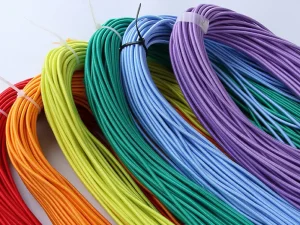
A woven elastic cord is an elastic cord that has a tightly woven outer cover around a stretchable rubber or spandex core. This process is known as weaving. Here, the yarns are arranged both lengthwise and crosswise around the rubber. This creates a tight and stable structure rather than a stretchy one. Even if you start and use it many times, it will not become loose. Its tightly woven structure helps the cord maintain its thickness and shape. Additionally, closely packed woven yarns do not allow dust and dirt to damage the inner core. That’s why they are often found in heavy-duty backpacks, luggage straps, cargo nets, and workwear.
4- Round Elastic Cord
A round elastic cord is a circular elastic cord. Unlike flat 신축성 있는 의류 밴드, which are wide, this cord is round from every angle. This shape is what makes it easy to pull, tie, thread through small holes, and fit into narrow fabric channels. For example, it can move in any direction without the risk of folding and twisting. That’s why products that need adjustable drawstrings use round elastic cords. Also, round elastic cords come in different diameters, from thick to thin, for different casing sizes.
5- Flat Elastic Cord
A flat elastic cord is a stretchable cord that is wide and flat instead of round. This flat shape makes it useful for many reasons. Generally, you see that a round cord can sometimes twist, roll, or create pressure in one small area. This pressure irritates the skin and makes me feel uncomfortable. But with a flat elastic cord, it stays in place more easily. It means it spreads the pressure over a large area and feels comfortable against the body. That’s why many manufacturers choose flat elastic cords for products that people wear for long hours.
6- Shock Cord (Heavy-Duty Elastic Cord)
A shock cord, also called a heavy-duty elastic cord or bungee cord, is one of the strongest types of elastic cord. It is specifically made to hold and secure heavy or bulky items, not clothing. Unlike ordinary elastic cords, shock elastic cord has strong elastic strands that can stretch to long distances. At the same time, the external covering is made with polyester or nylon that is worn very thickly.
These covers resist sunlight, rainwater, and humidity very well. Another good thing about this type of elastic cord is that it can absorb sudden pulling forces. When something moves or shakes, the cord stretches a little instead of pulling too hard straight away. That’s why you can find this elastic cord in camping tents, tarpaulins, backpack straps, cargo nets, luggage, and trailers.
Common Materials Used in Elastic Cords
Remember, the real performance of the elastic cord highly depends on the material it uses. Manufacturers use various materials to make elastic cords to meet different needs. For example, some materials provide flexibility, while others maintain stability. So let’s discuss the common materials used for making elastic cords so you can choose the right one.
- 천연 고무: It has been one of the oldest materials used to make elastic cord for centuries. It is made from the sap of rubber trees and is known for its natural flexibility.
- 라텍스: It is a type of natural rubber that is well known for its high elasticity. Latex can stretch easily and return to its original length again and again.
- Spandex: Spandex is a synthetic elastic fiber that has outstanding stretching ability. It stretches twice its length without losing its elasticity. It also performs better against moisture and body sweat.
- Polyester Cover: Polyester is the most widely used material for the outer covering. It does not provide the stretch itself. Instead, its job is to protect the elastic core inside.
- Nylon Cover: Nylon is also used in making elastic cord covering. It has excellent resistance to rubbing and wear, so the elastic remains in good condition for a long time.
- Cotton Cover: Cotton is a natural fiber that has become a popular option for the outer cover of an elastic cord. Unlike polyester or nylon, cotton feels gentler against the skin and gives the cord a smooth look.
Advantages of Using Elastic Cords
Elastic cords are used in almost every part of the garments we wear every day. The reason for their wide usability is strength, stretch, flexibility, and design options. But that’s not all. Here, I will discuss more benefits that make the elastic cords stand out in industrial and garment manufacturing.
- Excellent Flexibility: The major benefit of the elastic cords is their excellent flexibility. They can stretch, bend, twist, and move in different directions without the risk of breaking. That’s why the product can easily adjust to different sizes, shapes, and movements.
- High Stretch Recovery: Elastic cords not only stretch but also easily return to their original shape and length. This is known as stretch recovery. This recovery helps the cord continue working and prevents it from loosening over time.
- Lightweight: No doubt the elastic cords are highly strong. But that strength comes with being lightweight. It means they add very little extra weight to a product. As a result, the product becomes easier to handle and carry in everyday use.
- Easy to Install: Another thing that makes the elastic cord stand out is how simple it is to work with. How? Actually, it can be cut into different lengths, sewn into garments, and passed through fabric channels. That’s why manufacturers can easily create different designs.
- Long Service Life: Generally, elastic cords are made with high-quality materials. Those materials can withstand water, sunlight, rubbing, and other harsh conditions. That’s why they last longer and perform well without frequent replacements.
- Cost-Effective: Lastly, the elastic cords are a more cost-effective option than premium cords for many uses. They provide flexibility, strength, and durability without increasing production costs. Also, they last longer and come in various designs. Overall, this reduces the cost of multiple cord options and replacements.
Best Use Cases of Elastic Cords
Due to the range of such benefits, elastic cords are not confined to a single industry. Their ability to stretch, recover, and be durable makes them the choice for many products. From your everyday products, like bags, to large industrial products, these cords are used. For better understanding, here is a table showing the areas where the elastic cord is commonly used.
| Industry | Common Applications |
| Garments | Hoodies, jackets, sportswear, waistbands |
| Bags & Luggage | Backpacks, drawstring bags, luggage |
| Footwear | Shoes, boot laces |
| Outdoor Gear | Tents, tarpaulins, sleeping bags |
| Medical | Face masks, braces, protective clothing |
| Sports | Sports bags, protective gear |
| Automotive | Cargo nets, storage systems |
| Industrial | Tool holders, machine covers, packaging |
Factors to Consider When Choosing an Elastic Cord
As you can see, there is a variety of elastic cords in the market. That’s why choosing the right one can be very overwhelming for anyone. But remember, using the wrong elastic cords for any need can lead to poor performance and wasted money. That’s why, to make things easier for you, I will discuss some factors you must consider before choosing an elastic cord.
- 머티리얼 유형: The very first thing you should consider is the material of the elastic cords. As I said above, they are made with different materials. But each of those materials offers different levels of stretch, recovery, and flexibility. For example, if you need excellent elasticity, choose natural rubber or latex. However, for maintaining stretch and stability, spandex is the best choice.
- Cord Diameter: Cord diameter refers to how thick or thin an elastic cord is. So it is the second most important thing you must consider. For lighter products like face masks and hats, you should choose narrow elastic cords. However, for heavy-duty applications like tents and cargo nets, choose the wide elastic cord.
- Stretch Percentage: Each elastic cord has a different stretch percentage. So if your product needs to stretch a lot to provide flexibility, you should choose the elastic cord with a higher stretch percentage. However, for products that need stability more than flexibility, lower stretch is enough.
- Tensile Strength: Tensile strength is the maximum pulling force an elastic cord can handle before it breaks. It is all about the strength of the elastic cord. For lightweight products, tensile strength does not matter. However, for heavy-duty products like cargo nets, higher tensile strength becomes very crucial.
결론
Elastic cords are very small, but they are the most important part of many everyday products. They have the ability to stretch and return to their original length without the risk of breaking. That’s the reason, now, besides garments, they are also used in several industrial products. This wide suitability is due to the benefits and variety of types they offer. Unlike ordinary cords, the elastic cords last longer, offer flexibility, and are lightweight. But the right elastic cords are the ones that match your needs. For this, you should always consider the material types, stretch level, strength, and your budget.