You already know the pain of ordering thousands of yards of elastic to start the production. However, when the shipment arrives, the elastic quality is low; it snaps too easily or loses its shape after one stretch. Because of this, your order is at risk. Poor-quality elastic can ruin entire batches, consuming your time, money, and the trust of your customers.
In this blog, we will talk about how to check the quality of elastic. You will learn what makes your elastic good, why materials matter, how recovery & stretch work, and which pattern or construction fits each product. We will look at the testing factory capability and some common mistakes in buying. Let’s get started.
What Makes An Elastic Band Good
A good elastic band stretches very smoothly and snaps back without losing its shape. It feels firm, comfortable, and does not break easily. It stays stable after repeated pullings. When the elastic performs reliably, it becomes very easy to cut, sew, and integrate into the large production runs.
In elastic, quality really matters, because elastic is used in garments, underclothes, bags, medical supplies, and also in crafts. Due to weak elasticity, you may encounter broken straps, sagging waistbands, poor comfort, and a high return rate. Strong elastic provides you with a better fit, extends the life of the cloth, and leads to higher customer satisfaction.
Good quality of elastic also improves the product demand. Waistband looks clean, straps stay neat. Edges of the elastic remain stable. This increased brand value, leading to higher customer demand and repeat purchase rates. That is why all these small details matter.
If you want to learn about FOE, read this blog of LightSpot fold-over elastic, which explains how to select premium quality options and use of garments.
Check The Material First
Natural Rubber vs Spandex vs Polyester
Materials are very important in elasticity; they control everything, such as stretching, comfort, and the life span of your elastic. Natural rubber is stretchy and strong, but it’s sensitive to heat and moisture. Spandex, on the other hand, keeps its elasticity and snaps back reliably.
Polyester enhances the durability of your elastic and resists fading in many products. Both spandex and polyester blends create the best balance. Manufacturers of high-quality products, such as LightSpot, rely on the best and premium tested fibers. These materials ensure the best performance for large orders and reduce the risks of defects in the bulk shipments.
Why Material Blend Matters
Cheap quality of elastic contains too little amount of spandex and poor-grade rubber. These blends snap very easily and do not give you proper shape. A high spandex content ratio provides smoother stretch and long-lasting stability.
A proper blend enhances the elastic’s behavior while sewing. High-quality elastic runs smoothly through the machine and withstands stitching. Cheap elastic can snag, scorch, or distort with normal heat.
Material Comparison Table
| Material Type | Strength | Recovery | Durability | Best Use Cases |
|---|---|---|---|---|
| Natural Rubber | It has a Strong stretch | Moderate | Low with heat/moisture | Waistbands, basic garments |
| Spandex | It has Excellent elasticity | Excellent | Their durability is high | Sportswear, underwear |
| Polyester | Moderate | Moderate | Their durability is very high | Bags, crafts, and outdoor use |
| Spandex + Polyester | It is Balanced | Excellent | Their durability is high | Most premium elastic products |
Look At Stretch And Recovery
The Quick Stretch Test
Pull it evenly and hold the elastic with both hands. A good quality band stretches cleanly without any sudden tight and jerky resistance. This smoothness indicates that both fiber and weave are working together effectively.
What Good Recovery Feels Like
Let your elastic go. It should snap back to its original look and length instantly. This is a sign that the structure is solid and it is not overstressed.
Warning Signs
Poor-quality elastic loses its size and does not snap back properly. The over-stratched band feels soft and stays longer when you pull it. The good quality of the elastic maintains its shape after multiple tests. If you pull it ten to fifteen times, it already appears distorted; consider moving on to another supplier.
LightSpot guide on bulk lanyard orders
Check Thickness And Density
Why Density Means Durability
When you slide your finger across the band, it should feel soft but firm. There must be no thin patches or uneven textures. The tight weave enhances stability and helps the elastic band withstand long-term use. Dense elastic is better at staying flat and not curling.
How To Compare Two Bands Quickly
Place both bands in your hand. Bend each band. A stable and good-quality elastic bends very smoothly without any brittleness. The denser band often feels slightly heavier. Remember one thing that thicker elasticity does not always mean better quality. You need balanced thick, not bulk. Elastic that’s too thick can be uncomfortable and isn’t a good match for lighter garments.
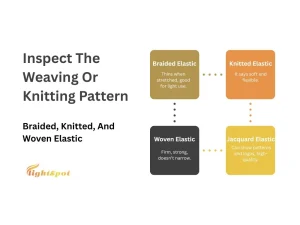
Inspect The Weaving Or Knitting Pattern
Braided, Knitted, And Woven Elastic
- Braided Elastic
Braided elastic gets thinner when you stretch it. It works best for light applications.
- Knitted Elastic
It says soft and flexible.
- Woven Elastic
It stays firm and strong. It does not narrow during stretch.
- Jacquard Elastic
Jacquard elastic is best for designing in detail, logos, and patterns. LightSpot produces it in-house to ensure the tension and smoothness of quality.
Signs Of Poor Weaving
Their threads are loose, have uneven tension, and have gaps in the pattern. Even small flaws can cause it to break during sewing or after a few washes.
Check Color Quality And Dye Stability
Why Color Fastness Matters
Good elastic keeps its color and won’t bleed in the wash. Use a damp white cloth to rub the surface and test it. If the cloth stays clean, that means the dye is stable. Color consistency is a crucial factor when ordering multiple rolls.
Why Some Manufacturers Save Money On Dye
Using cheap dye saves money, but it fades quickly and bleeds into fabric. Lightspot controls every step of dyeing. So every batch comes out the same, and you don’t get mismatched rolls.
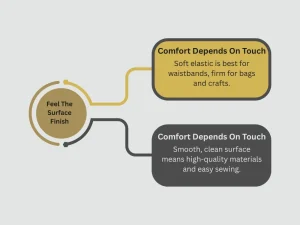
Feel The Surface Finish
Comfort Depends On Touch
Soft and smooth elastic is best for waistbands and underwear. Firmer elastic is best for two things: crafts and bag straps.
Why Finish Signals Quality
The quality of the elastic matters because it has no sharp edges and no scratchy fibers. Surface looks clean and uniform. A good finish shows that both materials and machinery meet a high standard. This thing makes sewing easier and reduces friction.
Check The Odor
Smell the elastic first. Cheap materials have a strong chemical odor. The high-quality elastic has little or no smell. A strong smell usually means low-grade rubber or untreated fibers. If the factory can not control the amount of odor, it usually cannot control consistent material quality.
Ask For Test Reports
Essential Tests To Request
Check reports for recovery, tensile strength, color fastness, and shrinkage. These tests make sure how elastic behaves under real use.
Why Reports Matter
Test reports are very important because they save you from inconsistent bulk shipments. This thing reduces the complaints, returns, and delays in production. You can use reports to compare suppliers and assess their performance.
Verify The Manufacturer’s Capability
Factory Quality Matters
Some suppliers send you high-quality samples, but deliver lower-quality bulk products. You need factories that operate on real production lines and have strict control systems.
Ask about their machines, like the jacquard machine, the knitting machine, dye control, and in-house production. LightSpot has over 15 years of experience; they handle elastic manufacturing from start to finish. They offer custom colors, sizes, patterns, and logo support. Their minimum order quantity is only 2000 yards.
Check MOQ And Customization Options
A low MOQ is best for your first order. This thing is better because you will see the quality of the elastic before ordering in bulk. Custom colors and sizes help you stand out. LightSpot gives you flexible options that are according to your production needs.
Compare Price, But Avoid The Cheapest
The cheap quality of the elastic band loses its shape instantly. Durable elastic lasts longer, reduces replacements, and keeps customers happy. Paying a little extra keeps your product and brand strong.
Always Request Samples
There is a simple kit that helps you test the stretch, feel, color, and pattern quality of the elastic. You know exactly what you are buying. LightSpot gives fast sample support for its bulk buyers. Use a sample to test sewing and compatibility.
How To Avoid Common Buying Mistakes
Never rely on the appearance of elastic. Always check these two things: stretch and recovery. Never skip test reports. Avoid choosing cost over reliability. Never forgot to test the elastic after washing and drying.
Why Buy Elastic From Lightspot
lightSpot has 15 years of production experience. The sectors of clothing brands, bag makers, and underwear factories rely on their stable quality. Their knitting, weaving, and jacquard machines ensure consistent performance. Their delivery is fast. Client feedback is positive and verified.
Conclusion
Choosing high-quality elastic is very important; it protects your brands and your products. Now you know how to judge the material, stretch, recovery, color, density, and finish of elastic. You can easily spot the weak construction fast. With proper confidence, you can compare suppliers. These all points help you to avoid delays in production, bad batches, and expensive returns.
These all things help you to build better garments, bags, and craft items. Strong bands improve the comfort, fit, and durability. It also makes the trust of customers and the product. Always check the samples first, review the reports, and verify factory capability.
When you follow all these steps, you make better bulk decisions. This action saves your money, and you maintain a stable and predictable production.
FAQs
How Do I Choose The Right Elastic Type For My Product
First, match the type of elastic with your product’s function. Then check the comfort and stretch level of the band.
What Is The Best Material For Elastic Bands
Spandex and polyester are both the best materials for elastic bands. Their blend offers the best balance of stretch, recovery, and durability.
How Can I Test Elastic Quality At Home
Stretch it with both hands, release it, and feel the surface of the elastic. Check the recovery, then judge the quality.
What’s The Ideal Width For Waistbands, Bras, Or Bags
Waistbands need two to five centimeters, bras one to three centimeters, and bags two to four centimeters.
How Does MOQ Affect Bulk Elastic Orders
Lower MOQs reduce risk and let you test quality before placing large orders.
Request a free sample today. Contact the Lightspot team via WhatsApp and begin your bulk order!