Packaging Test Reports
All reports below were issued by Bureau Veritas Shenzhen Co., Ltd. (Dongguan Branch) under the heavy metal requirements for packaging and packaging materials of Regulation (EU) 2025/40 (PPWR). Conclusion for every component: PASS.

Packaging Item: Plastic Clip
Report No.: (8826)229-0086
⬇ Download PDF
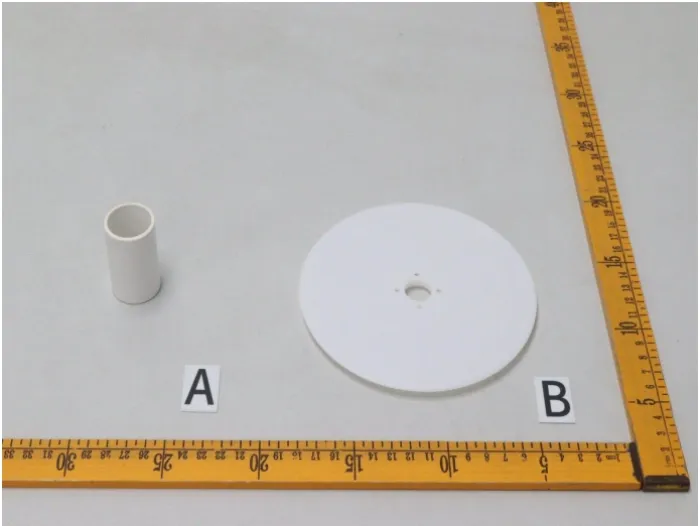
Packaging Item: Plastic Spool With Paper Core
Report No.: (8826)236-0089
⬇ Download PDF
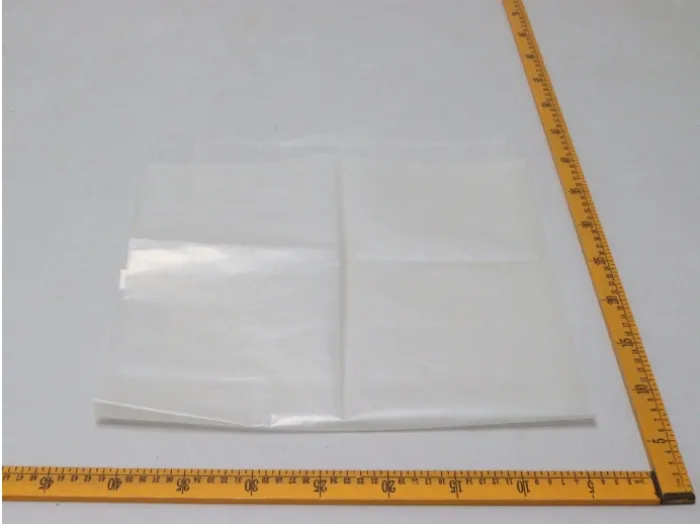
Packaging Item: Plastic Bag (poly bag for packaging)
Report No.: (8826)229-0085
⬇ Download PDF
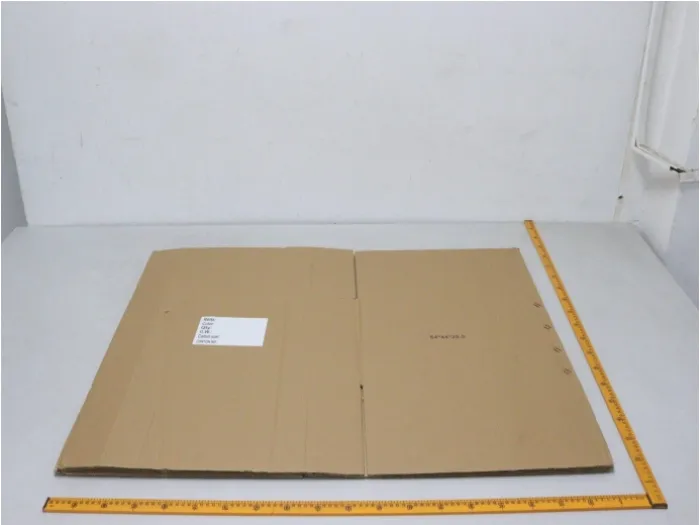
Packaging Item: Carton
Report No.: (8826)226-0127
⬇ Download PDF
Click “Download PDF” to view the original report. You may also contact us directly to request the original report if you need to send it to your clients or use it for customs clearance or client compliance audits.
PPWR Heavy Metals: Limits & Our Test Results
Under Article 5 of the PPWR, the four heavy metals regulated in packaging are lead (Pb), cadmium (Cd), mercury (Hg) and chromium VI (Cr VI). We test packaging materials for all four.
The sum of all four metals must not exceed 100 mg/kg — our result: Not Detected (below 5 mg/kg)
PARAMETER 1
Lead
(PB)
ND
Not Detected · < 5 mg/kg
PARAMETER 2
Cadmium
(CD)
ND
Not Detected · < 5 mg/kg
PARAMETER 3
Mercury
(HG)
ND
Not Detected · < 5 mg/kg
PARAMETER 4
Chromium VI
(CR VI)
ND
Not Detected · < 5 mg/kg
Test method: Acid digestion followed by Atomic Absorption Spectrophotometry (AAS) or Inductively Coupled Plasma Spectrometry (ICP) for total heavy metal content. Detection limit: 5 mg/kg per parameter.
Packaging types covered: poly bags, shipping cartons, hang tags / paper cards, paper cores, plastic spools and plastic clips. New reports are added as packaging materials are updated — check back for the latest versions.
About the PPWR Regulation
What is the PPWR?
The PPWR (Packaging and Packaging Waste Regulation) — Regulation (EU) 2025/40 — was adopted by the European Parliament and the Council on 19 December 2024. It replaces the Packaging Directive 94/62/EC after more than three decades and applies from 12 August 2026, with staggered transition periods for individual provisions. On heavy metals, it maintains and tightens the existing rule: the sum of lead, cadmium, mercury and chromium VI must not exceed 100 mg/kg in packaging materials and their components.
PPWR Key Requirements at a Glance
PPWR Timeline
FEB 2025
Regulation enters into force
PPWR officially in effect.
AUG 2026
Main obligations start to apply
Including heavy metal limits — the first real milestone for importers. We completed third-party testing for all our packaging ahead of it.
AUG 2028
Harmonised EU packaging labelling applies
JAN 2030
Recyclability design, recycled content, minimisation and banned formats apply
2035
All packaging must be recyclable at scale
FAQ About Castor
Q1: Can I share these reports with my own customers?
Yes. Reports are provided with your order. Download the PDFs directly from this page, or contact us for the original files issued under our company letterhead.
Q2: Do the reports expire? How often do you re-test?
A report reflects the result of the tested sample. We re-test whenever the material, supplier or production process of a packaging item changes, or when EU limit requirements are updated — and we publish the latest reports on this page.
Q3: Can you arrange other tests besides heavy metals?
Yes. Depending on your target market, we can arrange REACH (SVHC), RoHS, packaging labelling compliance, physical performance testing and more. Contact us to discuss your specific requirements.
Q4: The packaging type I use is not listed — what should I do?
This list grows as we add new packaging materials. If the type you need is not shown yet, contact us and we will arrange testing and provide the report.
Q5: What does ND (Not Detected) mean in the reports?
ND means no target substance was detected above the method’s detection limit (5 mg/kg for this test). In other words, the actual content is below 5 mg/kg — far under the 100 mg/kg legal limit. This is the best possible result.
Q6: What is EPR, and how does it affect my orders?
EPR (Extended Producer Responsibility) makes the party who places packaging on the EU market responsible for the cost of collecting and recycling that packaging. For importers, this usually means you (or your customer) — not the factory in China — must register and report under each member state’s EPR scheme. Sourcing packaging that is already lab-tested keeps both sides simple.
Q7: Do individual EU countries still have their own packaging laws?
Yes. The PPWR applies uniformly across all 27 member states, but each country keeps its own national EPR packaging scheme (e.g. Germany’s LUCID/VerpackG, France’s Triman). In short: product compliance is EU-wide; waste fees are country-by-country.
Q8: What are the labelling requirements for packaging in Europe?
From August 2028, the PPWR requires harmonised EU labels showing material composition and recyclability. Our advice for now: keep clear material codes (PE, PP, PAP, etc.) on your packaging — this already meets current national requirements and gets you ready for the harmonised labels.
Q9: What are the new EU requirements for plastic packaging?
Beyond heavy metal limits, the PPWR introduces recycled content requirements: from 2030, plastic packaging must contain a minimum share of post-consumer recycled (PCR) material. From 12 August 2026, food-contact packaging must also meet PFAS limits — this mainly affects food industry buyers and does not change the compliance status of our garment trim packaging.
Q10: What types of packaging are there, and which ones come with my order?
By distribution level: primary packaging (in direct contact with the product), secondary packaging (sales packaging) and tertiary / transport packaging.
In our orders, poly bags, paper cores, and plastic spools are primary packaging that directly touches the product. Normally plastic spools with paper cores will be sold directly along with the products. Cartons are transport packaging, and printing labels are accompanying materials.
Every one of these has been tested separately — your entire packaging chain is covered.
Q11: What are the PPWR heavy metals?
The PPWR heavy metals are the four metals restricted under Article 5 of Regulation (EU) 2025/40: lead (Pb), cadmium (Cd), mercury (Hg) and chromium VI (Cr VI). Their combined concentration in any packaging material must not exceed 100 mg/kg. The requirement has applied to all packaging placed on the EU market since 12 August 2026. All our packaging has been tested for these four metals — see the report list above.