Elastic bands are used in many everyday products and even in different industries. They stretch, hold something together, and return to their original shape. You can find them in your clothing, packaging, stationery, crafts, and medical products. For businesses, when local supply is not enough or prices are too high, importing elastic bands from another country is the right solution. But if you are importing elastic bands into the USA, that’s not very simple. You have to understand many factors and go step by step. But if you are new to this import process, don’t worry! This guide to importing elastic bands to the USA will make things easier for you. As a buyer, I’ll explain how to place an order, ship elastic bands to the USA, and receive them without issues. So let’s get started.
Why Import Elastic Bands to the USA?
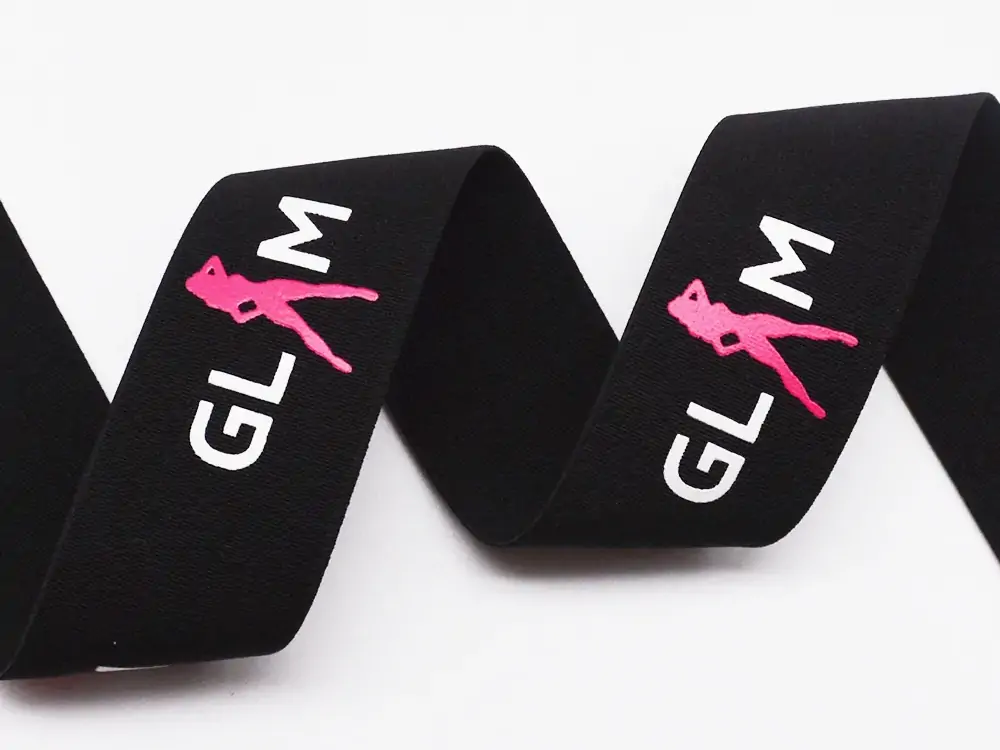
Many businesses in the USA need elastic bands in large quantities. Buying in such large quantities from another country can be a good option when local suppliers do not have enough stock. It also becomes crucial when local industries do not offer the exact product a business needs. International suppliers can also offer lower prices when the buyer orders in large quantities.
The second reason is that elastic clothing bands come in many different types. They are made from different materials and come in different sizes, colors, widths, and thicknesses. So it is not always necessary for local manufacturers to have all these in one place. Hence, buyers need to buy from another country. Even some suppliers offer customized elastic bands according to a buyer’s specific needs.
Step-by-Step Process for Importing Elastic Bands to the USA
Now you have an idea of why buyers from the USA order elastic bands from other countries. So how do you actually bring elastic bands from another country into the USA? It might seem difficult if you are doing it for the first time. But to help you out, here I will discuss the entire importing process step by step.
Step 1: Find Out Your Elastic Band Requirements
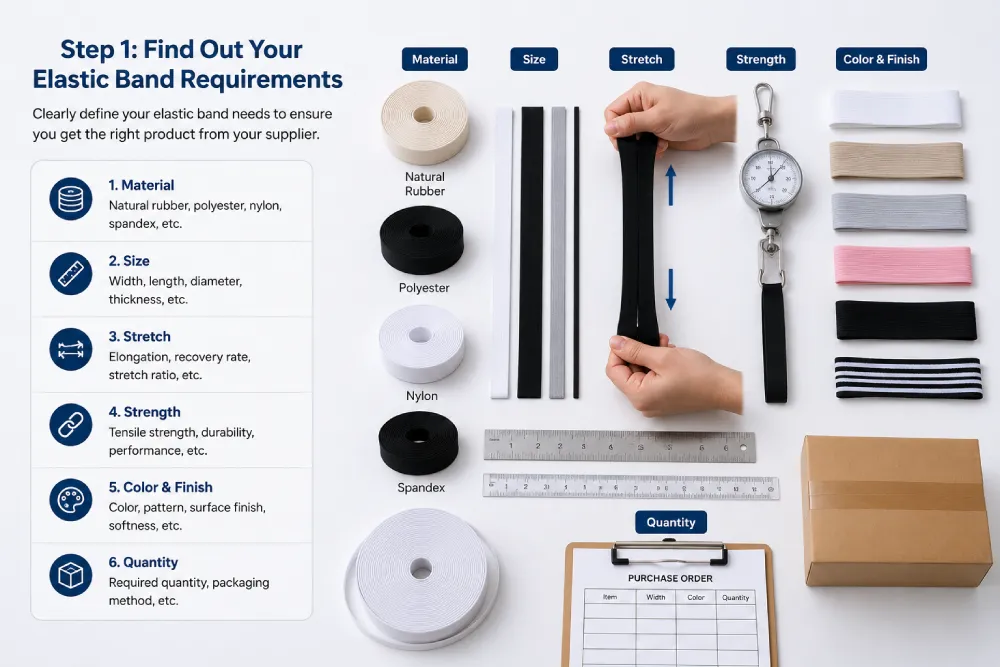
The very first step before you import an elastic band into the USA is to decide exactly what type of elastic band you need. If you only tell a supplier that you need “elastic bands,” they will not know the exact product you want. So you must have a clear idea in your mind about the material, size, shape, stretch, strength, color, and quantity.
Some elastic bands are made from natural rubber. However, some elastic bands use synthetic materials such as polyester, nylon, or spandex. Therefore, clearly decide what type of material you need for the elastic band. After that, you also have to specify the size, length, diameter, strength, stretch, and finish of the elastic band. All this information will give your supplier an idea of what you want.
Step 2: Search for a Reliable Elastic Band Supplier
Once you have a clear idea of the type of elastic band you need, the next step is to find a reliable supplier. This is a very important decision, as the supplier you choose today will affect the quality, price, delivery time, and success of your import. In the international market, you will find hundreds of elastic band suppliers.
However, you should always look for the one with more experience and positive customer feedback. Also, check that they can make the elastic band you want. For this, it is a good idea to contact a few suppliers. After that, compare their prices, product quality, minimum order quantity, and delivery time.
Step 3: Request & Test Product Samples
Now you have found the right elastic band supplier according to your needs. In the next step, you have to ask that supplier for an elastic band sample. This sample will allow you to see and test the actual elastic band instead of trusting only pictures. Check its size, material, thickness, color, stretch, and overall quality, and make sure it matches what you asked for.
Also, use the sample for the same purpose you plan to use the final product. At the same time, this sample will also help you find the problem before ordering a large quantity. If you want any adjustments to color, finish, stretch, or anything else at this stage, you can ask the supplier for them.
Step 4: Determine the Correct HTS Code
First of all, know that HTS stands for Harmonized Tariff Schedule. It is the system the USA often uses to classify imported products. The HTS code clarifies to U.S. Customs what your product is and helps determine the duty rate and other import requirements. In this step, you have to find out the HTS code for your elastic band.
As you know, elastic bands are made from different materials and can have different uses. That’s why they must have different HTS codes. To find the right code, go to the USITC HTS website, use the search box, and type your elastic band type. If you cannot understand this process, you can ask a customs broker for help.
Step 5: Calculate Import Duties & Landed Costs
Now it’s time to calculate the import duties and landed cost for importing elastic bands. Remember, the price you see from the supplier is not the final price. Suppose a supplier tells you that 50,000 elastic bands will cost $3,000. You might think that $3,000 is what you will spend, but that is not the full price.
The shipment has to travel to the USA, clear customs, and reach your final destination. Each step of this journey will add to your cost. So, in making the overall budget, you should calculate the landed cost. It includes the product price, shipping, customs duties, customs broker fees, insurance, and other charges. When you add all these costs, you will have a clear picture of what the elastic bands will really cost you after importation.
Step 6: Prepare Your Required Import Documents
Paperwork is a normal part of importing goods into the USA. When your elastic bands are shipped, customs will ask for basic information. They will need information about what is coming into the country, who is buying it, where it came from, and how much it is worth. For all this information, you have to prepare import documents.
These documents will make it easier to identify the shipment and prevent unnecessary delays. Some common documents include a commercial invoice, a packing list, and a bill of lading or an air waybill. The commercial invoice gives details such as the buyer, seller, product description, price, and country of origin. The packing list explains how the goods are packed. Lastly, the bill of lading or air waybill contains shipping information.
Step 7: Check U.S. Regulations & Product Requirements
After preparing the documents, you also have to make sure the elastic band follows the rules that apply in the USA. These rules can be different depending on what the elastic band is made of and where you will use it. For example, if you order a simple elastic band, it will have fewer requirements than one used in children’s clothing or for food contact.
For this process, the easiest approach is to tell your supplier exactly how you will use the elastic bands. After that, ask whether they have any test reports or documents for the product. You should also check whether a U.S. government agency has specific requirements for your product type. If you are not sure what rules apply, ask a customs broker for help before shipping.
Step 8: Choose the Right Shipping Method
When all of the documents are ready, it’s time to choose the shipping method. The method you choose depends on how much you are ordering, how quickly you need it, and the cost. If you are ordering small quantities, air shipping will be reliable. However, if you are ordering large quantities and can wait longer, shipping by sea is the best option. Generally, you can choose among air freight, ocean freight, and express shipping. Remember, air freight is faster but usually costs more. On the flip side, ocean shipping is slower but costs less for large orders.
Step 9: Understand Incoterms
When you buy elastic bands from an overseas supplier, you must know who will pay for each part of the shipping process. That’s where Incoterms will help you. Incoterms are standard trade terms that explain what the seller and buyer are responsible for during the shipment. They explain who will arrange transportation, who will pay certain costs, and when the risk of the goods transfers from the seller to the buyer.
You will most probably see terms such as EXW, FOB, CIF, DAP, and DDP in a supplier’s quotation. Each of these terms gives the buyer and seller different responsibilities. For example, if we discuss EXW, it states that the buyer takes on more of the transportation work. On the flip side, DDP puts much more responsibility on the seller. Hence, before accepting a quotation, ask the supplier exactly what the price includes. This will prevent you from choosing a supplier that looks cheap at first but later surprises you with extra shipping costs.
Step 10: Clear Customs & Receive Your Shipment
Once your elastic band order reaches the USA, it will go through customs clearance before you receive it. U.S. Customs and Border Protection (CBP) reviews the shipment data and ensures the goods are declared. Your customs broker, if you use one, will help you submit the entry information and handle communication with customs. At this stage, you must also pay any duties, taxes, and other charges that apply to the shipment. After customs releases the goods, they will be delivered to your location. When the shipment arrives, do not put it away immediately without checking it. Count the cartons and compare the quantity with your order.
How to Choose the Best Elastic Band Supplier for Importing into the USA
When importing elastic bands into the USA, choosing the right supplier is crucial. You will find several suppliers that offer the best services and quality. Remember, a supplier who offers a good price alone is not a good choice. You also have to consider some factors that will help you make the right decision.
- Quality & Consistency: First of all, make sure elastic bands are of the same quality in every order. If the first batch is good but the next is different, it will damage your business’s reputation. If possible, keep an approved sample so you can compare it with future shipments.
- Production Capacity: Secondly, ensure the supplier can produce the required quantity. A supplier who handles a small order easily might struggle when you need thousands or millions of elastic bands. Ask about their normal production time and how much they can make in a given period.
- Customization Options: Sometimes a standard elastic band is not enough for your needs. You want a special size, color, material, thickness, or stretch level. In this case, choose a supplier that will make the product according to your requirements.
- Communication & Documentation: Lastly, good communication makes the whole importing process much easier. Your supplier should answer your questions clearly. They should provide the right information about the product, price, quantity, time, and shipping.
Conclusion
Let’s conclude. Importing elastic bands to the USA may seem difficult the first time. But the process is much easier when you take it one step at a time. To make this process easier for you, I have broken down the entire import process step by step in this guide. Start by knowing exactly what you need. Check the material, size, stretch, strength, color, and quantity. Then find a supplier who provides good quality and maintains it with every order. Always ask for samples before buying in large quantities. You should also pay attention to the importing side of the purchase. Remember, the right supplier is not the one who offers the lowest price but the one who matches your business needs.