Lace is one of the most elegant fabrics in modern fashion. It enhances the look of ordinary outfits, making them stylish in no time. Besides clothes, you can also see lace on shoes, bags, and other items. But many think that all lace fabrics are the same. In reality, there are different types of lace materials. All those materials vary in thickness, looks, design, and even comfort.
That’s why, before you choose a lace material for any purpose, you must know its properties. Remember, choosing the wrong lace material will not only disrupt your project but also waste time and money. But if you are new to lace material, worry not! In this guide, I will discuss some of the most common lace materials that you can opt for. So let’s get started.
Some Common Types of Lace Materials

If you think lace is a single fabric, you are wrong. In fact, there are many lace materials with their own textures, patterns, appearances, and thicknesses. To make it easier to understand, I will discuss a list of common types of lace materials. So let’s dive in.
1- Chantilly Lace
Chantilly is a very fine, delicate lace known for its soft, elegant look. Originally, Chantilly came from France. Later, it became popular in almost every country. Chantilly lace is made with very thin threads that create light and detailed patterns. Most of the time, you will see floral or leaf-like designs in this lace. However, the background of this lace is slightly open and see-through, which makes the fabric look airy and very gentle. Another special feature of this lace is its scalloped edges. Those edges are gently curved and decorated, which enhances the look of an outfit.
2- Guipure Lace
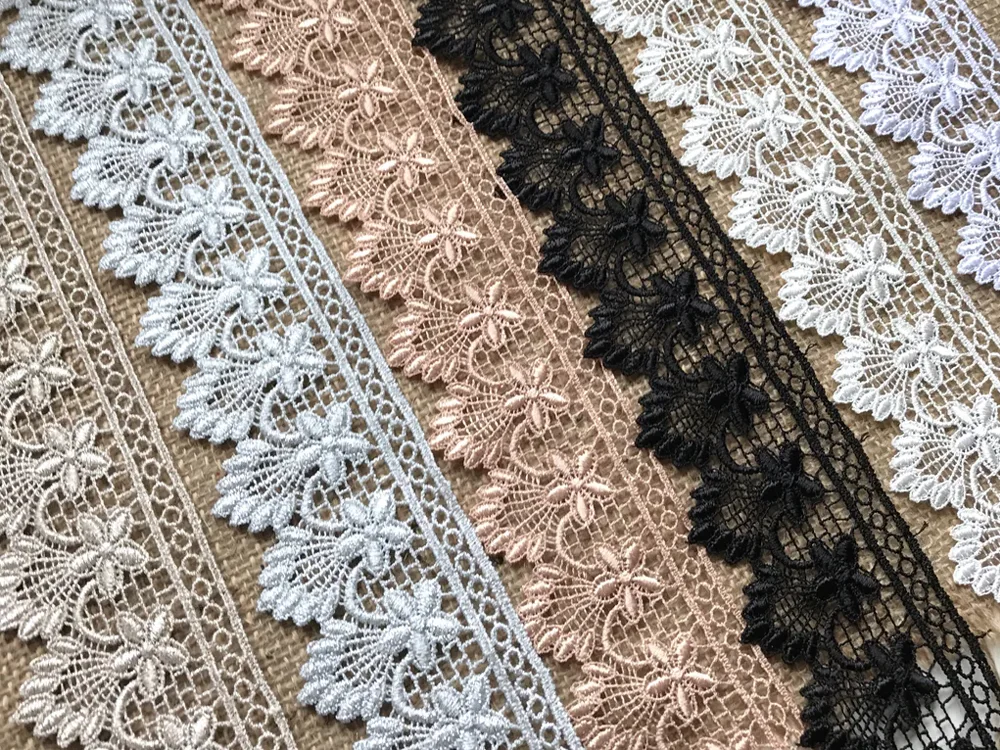
Guipure lace is a strong, bold type of lace that looks very different from soft lace. Instead of having a fine net background, Guipure lace is made by connecting patterns with thick threads or small bars. It means the design stands freely, with no visible mesh behind it. As a result, you can use it when you want full coverage for your clothes. Moreover, the thick nature of guipure makes it hold its shape well and does not drape. If you look at its design, it contains floral, geometric, or decorative shapes that make the outfit decorative.
3- Alençon Lace
Another lace material you can use is Alençon, often considered one of the most refined. Like Chantilly, it also comes from France and is now famous for its beautiful, handmade look. This lace is usually created on a fine net base. Then delicate patterns like flowers, leaves, and vines are carefully added on top. Such a pattern gives the lace raised outlines that look just like a 3D print. But remember that this detailing in Alençon lace takes time and skill to create. That’s why it costs more and is used for luxurious clothing.
4- Eyelet Lace
Eyelet lace is a simple yet very popular type of lace that is easy to recognize. How? Actually, it is made by creating small holes in the fabric. Then, experts stitch around those holes to form neat decorative patterns. These holes are usually arranged in shapes like flowers, circles, or leaves. These patterns give the lace a light, pretty look. Also, due to the small cut-out holes, air can easily pass through the fabric, which is why it feels cool and fresh on the skin. It does not have a heavy or stiff structure, so you can use it often in light and casual clothing.
5- Crochet Lace
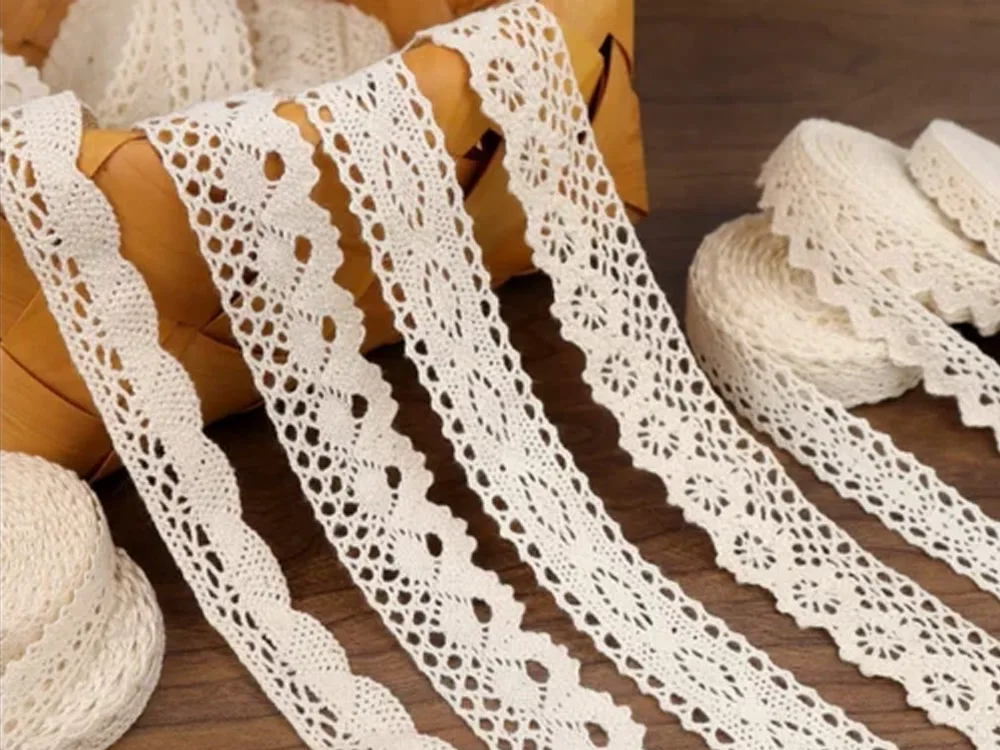
Crochet lace is a unique type of lace made with a crochet hook rather than weaving machines. It can be handmade or machine-made. But handmade crochet lace is especially loved for its detailed work and artistic feel. Manufacturers make this lace by looping threads together in a pattern. These patterns are usually larger, which makes the design look bolder, more creative, and raised rather than flat. That’s why you can opt for tops, dresses, skirts, and bohemian-style clothing.
6- Embroidered Lace
Embroidered lace is a more beautiful lace than all of the above. It is made by adding decorative stitching on a base fabric, usually a fine net or mesh. In other lace types, you see that they are made using lace thread only. However, embroidered lace is created by sewing patterns like flowers, leaves, or simple shapes directly onto the fabric. This makes the designs look clear and easy to see, just like artwork on cloth. Sometimes small extras, like beads or shiny threads, are added to make it look even more beautiful. As a result, the base fabric stays light, while the stitched designs and beads give a slightly raised feel.
7- Stretch Lace
In stretch lace material, the lace contains elastic or stretchy fibers mixed into it. Because of this, the fabric stretches easily and returns to its original shape. This makes it very unique from old laces and best for uses where flexibility is of utmost importance. But its stretchability is not simple. Instead, it also contains decorative lace patterns that do not feel tight or uncomfortable. Instead, it adjusts to body movements and gives a better fit. You will often find it in lingerie, body-hugging dresses, tops, sleeves, and undergarments.
8- Cotton Lace
Now it comes to cotton lace, which is mainly made from cotton fibers. Cotton fibers are known for their soft, light feel. That’s why these cotton laces feel very comfortable to carry. Moreover, unlike shiny or synthetic laces, cotton lace has a more natural and matte appearance. It often looks clean, fresh, and easy on the eyes. Cotton is also a breathable material, allowing air to pass through it easily. Because of this, it feels cool on the skin and is very good for warm weather. If we discuss the patterns that can be made on cotton, these are usually floral or simple decorative designs. Heavy designs often are not suitable for this lace material.
9- Nylon Lace
Another popular material used for lace is nylon, a synthetic fiber. It means it is not derived from plants or animals, like cotton or silk, but is produced in factories. Because of this, nylon lace is usually strong, long-lasting, and easy to produce in a wide range of designs and colors. It is also lightweight and smooth, making it comfortable to use for lace-making. The nylon laces are flexible and can bend and adjust without breaking easily. Also, these laces do not wrinkle easily and retain their shape even after washing or regular use.
10- Polyester Lace
Polyester is also a synthetic material now used to make laces. What makes polyester lace special is its balance between beauty and strength. It can look very delicate and decorative, like expensive lace. But at the same time, it is much stronger and easier to care for. How? Actually, polyester does not wrinkle easily; it dries quickly and keeps its shape for a long time. So you don’t have to worry about shrinkage after washing polyester-made laces. Another good point about polyester is that it can be made in many styles. So its laces usually look very bold, textured, and stylish in all senses.
11- Silk Lace
Silk lace is one of the most luxurious and elegant types of lace. It is made from silk fibers sourced from natural sources. Silk is known for its smooth texture and soft shine. When it is used in lace, it creates a very rich and graceful look. What further makes silk lace a favored option is its natural softness and beautiful flow. It feels very smooth on the skin and drapes in a very gentle way. Even if you do not use ordinary lace material due to skin irritation, silk is the best option. In terms of lace design, silk also offers a wide variety. The patterns in silk lace can be fine and delicate, floral and decorative. The silk itself has a slight natural shine that makes even simple designs look more premium.
12- Metallic Lace
Lastly, there are metallic laces that are known for their decorative appearance. In these laces, usually metallic threads such as gold, silver, or other glitter-like fibers are used. These fibers are woven by machines or by hand into delicate patterns. As you know, metallic fibers have shiny surfaces, so the overall lace becomes more elegant even with a simple design. Unlike soft everyday lace, metallic lace feels more structured. This lace material might not prioritize comfort but rather style and appeal. You can use metallic lace for party wear, evening dresses, festive outfits, and stage costumes.
How to Choose the Right Lace Material for Your Needs
As you can see, several material types are used to make laces. But it does not mean that all that material will fit your needs. A slight mistake in the lace material can ruin your entire project. To help you make the best choice of lace material, I will discuss some key factors to consider.
-
Purpose of the Lace
First of all, you should know where you will use the lace. Suppose you are making a wedding dress or a formal gown. In such a case, you will need something elegant and delicate, such as silk or Chantilly lace. However, if you are using lace for daily wear, home décor, or casual clothing, cotton or polyester lace is better.
-
Comfort & Wearability
If you are buying lace for clothing, comfort becomes very crucial. For comfort, cotton lace, stretch lace, and silk lace are handy options. They are soft and breathable. However, some decorative laces, such as metallic or guipure lace, look beautiful. But they are not always the most comfortable for everyday wear.
-
Durability & Maintenance
Not all lace materials are easy to maintain. Some of them are strong and long-lasting, while others are very delicate. For example, polyester lace and nylon lace are strong and do not wrinkle easily. So you can use them when you want low maintenance and need lace for daily use clothes. In contrast, silk lace or Chantilly lace is very delicate. You have to be very careful in its use, washing, and handling.
-
Budget & Availability
Lastly, your final budget also plays a role in choosing the lace material. Some lace materials, like silk lace, are expensive. Why? They are made from natural fibers and require more careful production. So you can choose them when you have a high budget and for luxurious fashion. However, materials such as polyester and nylon lace are more affordable and readily available. For casual dresses, you can create elegant designs with these affordable lace options.
Conclusion
Laces are among the most beautiful and versatile fabrics that have been in the fashion industry for centuries. They can turn any simple cloth into a stylish one. But the material used to make these laces is not always the same. Instead, they come in various materials, as I have discussed in this guide. You can see that each lace material varies in style, appearance, pattern, and thickness. That’s why it is key to choose the right material that fits your needs. So always first understand your project’s nature, comfort level, durability, and budget.