Merrowed edge vs. hot cut edge: Which border is best for your custom patches? This is the question that often comes up during the patch design process. Actually, custom patches have become a very favored choice to add identity, style, and meaning to clothing and accessories. You can find them on uniforms, jackets, hats, backpacks, sports apparel, and promotional products.
However, when designing a custom patch, most people focus only on the artwork, colors, and size. In all this, one important thing that is overlooked is the patch border. You will find several border options, among which the merrowed edge and the hot-cut edge are two common ones. Many think that both are the same, but that’s a wrong concept. In this guide, I will compare both border options and help you choose the best one for your custom patch. So let’s get started.
Merrowed Edge vs Hot Cut Edge Borders: Key Differences
No doubt, both narrowed and hot-cut borders give patches a finished look and help protect the edges from damage. But it does not mean they are the same, and you can choose anyone for any patch. These options vary in several aspects that make their use case different. To help you understand that, I will differentiate between the two border options in several ways.
1- Overall Appearance & Visual Style
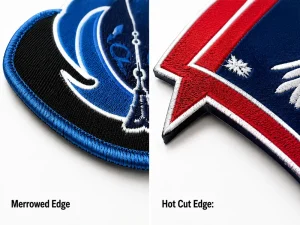
The most noticeable difference between merrowed and hot-cut borders is how they look and feel. Remember, even if two patches have the same design, the border will change their overall appearance. So when it comes to the merrowed edge, it creates a thick, raised border around the patch. The edge is usually covered with thread that wraps around the patch. As a result, the border gives the patch a very traditional, textured, rounded look.
Also, a merrowed border naturally draws attention to the edge, giving the patch a bold presence. On the flip side, a hot cut edge looks very different. Instead of a thick border, the patch has a clean and precise outline. Here, the edge follows the exact shape of the design. There is no bulky border surrounding the patch. That’s why the border looks modern, and the patch’s artwork receives more attention than the border.
2- Border Manufacturing Method
Secondly, both types of patch borders are made in different ways. For example, a merrowed edge is created by stitching a thick layer of embroidery thread around the patch’s outer edge. A special machine wraps this thread continuously around the border. This thread completely covers the raw fabric edge and forms a raised, rounded outline. As here, the border is made of embroidery thread, so it serves as a decorative part of the patch.
On the flip side, a hot-cut edge is made with heat rather than a thick stitched border. Once the embroidery is finished, the patch is cut to its final shape using a heated tool or a laser. The heat basically cuts the fabric and seals the edge at the same time. That’s why there are no fraying edges, which give the embroidery patch a smoother look. In some cases, manufacturers also add a thin satin stitch around the edge for extra strength.
3- Shape Flexibility & Design Detail Capability
Shape flexibility and design detailing are two other areas where merrowed and hot-cut edge borders differ. Usually, a mitered edge works best with simple, regular shapes. Why? Because the border is created by wrapping thick thread around the edge. As a result, it is easier to apply to circles, squares, rectangles, ovals, and similar designs.
But when a patch has many curves, sharp corners, and narrow sections, you cannot easily create a merrowed-edge border. Similarly, a merrowed border takes up some more space around the edge of the patch. As a result, very small details or text placed near the border might not stand out. On the other hand, a hot cut edge offers much greater shape flexibility. As I said above, the patch is cut and sealed with heat here.
That’s why manufacturers can follow almost any outline with ease. Whether it is a logo, mascot, letter, or symbol, the edge will match the original artwork. The patch can keep its original shape without prominent edges. Likewise, when it comes to adding design detailing, a hot cut edge does not require a thick outline. That’s why there is ample space for the real design to stand out.
4- Durability & Edge Protection Level
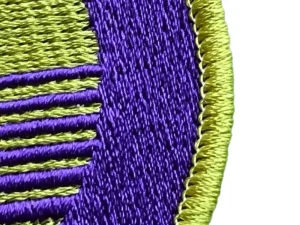
In terms of durability and edge protection, merrowed edge borders for patches stand out. The main reason is its thick embroidery thread. Those threads completely cover the patch’s outer edge. With these threads, this edge has an extra layer of protection. This border will act as a shield around the patch and help reduce wear on the fabric underneath.
However, a hot-cut edge border is also durable and protects the patch in different ways. Here, there is no thick thread border, but the heat seals the fabric edge. This sealing process prevents the material from fraying. As a result, the patch remains neat and durable during normal use. But remember, there is no permanent thick thread layer in hot cut edges. So, it will not provide the same level of protection to the patch.
5- Suitability for Patch Type & Customization Options
Now it comes to which type of patch each border option fits and their customization. A merrowed edge is generally suitable for traditional patch types. You will often see it on military patches, scout badges, school emblems, and sports team logos. The reason for this is very simple: these patches have simple shapes and need a strong, classic look. So that’s merrowed edges that fit all these needs well. But if we talk about customization, merrowed edges are compromised. As you know, this border type is thick and stitched around the edge.
That’s why it might not work with very complex or unusual patch shapes. In contrast, a hot-cut edge is much more flexible in patch types. You can use it for fashion patches, brand logos, promotional designs, and even custom artwork. All these patches generally have unique shapes, fine details, or modern styles. So a hot cut border can follow all types of these complex outlines. Moreover, in terms of customization, the hot-cut edges offer more freedom. You can create detailed logos, text, and creative shapes without worrying about border limitations.
6- Overall Thickness & Texture Difference
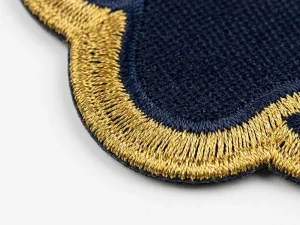
Another clear difference between a merrowed edge and a hot-cut edge border is their texture. If we discuss the merrowed, it is usually thicker around the border. This is because the edge is built using layers of tightly wrapped embroidery thread. When you touch it, you will clearly feel the raised and slightly rounded border.
It has a strong, textured feel that stands out against the patch’s flat surface. Conversely, a hot cut edge patch feels much flatter and smoother. Here, the border is created by cutting and sealing the fabric instead of wrapping thread around it. That’s why there is no raised edge. When you touch it, it will feel lightweight and less bulky than the merrowed one.
7- Common Applications & Best Use Cases
Due to variations in several aspects, the usability of both border options varies. For example, a merrowed edge patch is best for traditional and formal uses. That’s why you can use it.
- Military uniforms and badges
- Police and security patches
- Scout groups and club emblems
- Sports team logos
- School and college badges
- Work uniforms and official dress codes
On the other hand, a hot cut edge border is best for modern, creative, and custom designs. You can use it on.
- Fashion clothing and streetwear brands
- Corporate logo and custom patches
- Promotional and marketing giveaways
- Custom chenille patches with unique shapes
- Detailed artwork and creative designs
- Small text or fine-detail logos
8- Overall Cost & Affordability
Lastly, cost ultimately differentiates the merrowed edge from the hot-cut edge. No doubt, both perform the same function, but there are several things that affect their final cost. For instance, a patch with a merrowed edge is more budget-friendly. The main reason is that this border is made using a repeated stitching process. That’s why it takes less time during bulk production, reducing the cost per patch.
On the flip side, a hot cut edge patch can sometimes cost a little more. This is because each patch is carefully cut into its exact shape and then sealed using heat. This process demands more precision, especially when the design is complex or has unusual edges. All this ultimately increases production costs, which in turn raises the overall cost.
Quick Highlight: The higher cost of the hot cut edge does not mean it is not a good option. These borders allow you more freedom in design and complexity. So basically, you are paying for accuracy, flexibility, and detail. If your design is unique or has fine elements, this extra cost is worth it.
Merrowed Edge vs. Hot Cut Edge: Which Border Option is Best for Your Custom Patches?
There is no single best border option for every type of patch. The choice highly depends on your needs. If you want a strong, traditional look with durability, a merrowed edge is usually better. However, if you need a modern design with more detail and custom shapes, a hot cut edge is the better choice.
From the above all differences, you can see that both border options are made for different needs. Whatever border option you choose must match your patch needs. Generally, a merrowed edge is usually the best option when you are working on simple and standard designs. It has a thick, stitched border that gives the patch a bold, classic appearance.
At the same time, this thickness enhances the patch’s durability and longevity. Also, this border option is cost-effective because it is easier to produce. But when it comes to complex design, merrowed might not be a good choice. In that case, you have to go to the hot cut edge border. It is cut and sealed using heat, so it can follow almost any shape.
It allows more freedom because the patch is cut exactly around the design. But in terms of durability, it might be lightly compromised. Also, higher hot-cut edge prices can be a problem for budget-tight projects. So always keep these factors in mind and choose the border option that best matches your needs.
Conclusion
Custom patches have become a must-have in several apparel and accessories. However, these patches do not look clean on fabric without borders. That’s where different border options come into play. Among those hot cut and merrowed edges, borders are very common. At first, both are alike, which confuses the beginners. But in reality, they vary in several aspects that I have discussed in this guide. There is no single best border choice for every patch. It depends on your patch type and needs. So if your goal is to create a long-lasting patch with a classic and bold look, a merrowed edge is a solid option. On the other hand, if your design is more creative, more detailed, or custom-shaped, a hot-cut edge offers greater freedom.