Elastic cords are one of those everyday items we rarely notice. Yet, they are all around us, from your joggers and bags to shirts and pants. The ability of elastic cords to stretch and restore is what makes them essential in countless products. But what are these elastic cords made of, and how are they manufactured? This article will provide you with a complete elastic cord guide, from its uses to types and features. So, let’s get started!
What Is an Elastic Cord?

Let’s first understand what exactly an elastic cord is!
An elastic cord is a rope-like, stretchable piece that is made of flexible materials. Those materials allow it to stretch when pulled and return to its original position when released. This stretching ability makes it useful for safely holding and tightening things.
Basically, the elastic cord has two main parts. First, an inner core made from a stretchable material that provides actual stretching. To protect this core, an outer sheath is made from materials such as cotton or nylon. Its purpose is to protect the inner core and ensure durability, preventing loss of stretchability and strength.
Moreover, elastic cords come in various sizes and shapes to fit multiple applications. For example, some elastic cords are wide and flat. They are mainly designed to fit waistbands and straps. However, some elastic cords are round and thin. This design is helpful for bags, shoes, and jewelry. Also, remember that stretchability varies across elastic cords.
Common Materials For Making Elastic Cords
As I said above, elastic cords are made of two main cores: inner and outer. Both of these parts use different materials. So let’s discuss the common materials used to create an elastic core.
Inner Core Materials:
The inner core provides the actual flexibility and stretchability. So it is mainly made of
- Natural Rubber: Rubber is one of the materials that naturally gains stretchability. It does not get loose rapidly. That’s why it is most widely used to make the inner core of elastic cords.
- Latex: This material is also similar to rubber in its stretching ability. So many manufacturers use it as an alternative to rubber.
- Spandex: It is a synthetic material that is artificially made. It has greater stretchability than rubber and latex. Moreover, this material does not cause allergic reactions in people with sensitive skin.
Outer Core Material:
As you know, the elastic core protects the inner core. That’s why it is mainly made from durable materials. Those include:
- Nylon: It is a strong, flexible, abrasion-resistant material. That’s why it is ideal for an outer covering.
- Polyester: Polyester is a rigid, long-lasting material. It can effectively handle sunlight and moisture without deteriorating.
- Polypropylene: It is known for its lightweight, wear-resistant properties. Moreover, this material is readily available and is priced lower than other materials.
- Cotton: It is one of the softest and skin-friendly materials. That’s why it is valued for its outer covering of elastic cords that touch the skin directly.
How Elastic Cords Are Manufactured: Step-by-Step Guide
Now you know the basics of elastic cords and the materials used to make them. Next, it comes to how the elastic cord is actually made to provide such perfect elasticity. Let’s understand it step by step!
Step 1: Make the Inner Elastic Cord
The process begins with making the inner elastic core that truly provides flexibility. First, the right raw material (natural rubber, latex, or spandex) is selected. After choosing the material, it is melted or softened to make it easier to handle. That melted material is then passed through a machine with tiny holes. This process is known as extrusion.
After extrusion, the melted material emerges as thin filaments or strands. These filaments are cooled and solidified. After cooling, they are twisted to form a single inner core of the elastic cord. However, the number of filaments required to make a single inner cord depends on the desired stretchability. If you want more flexibility, you have to twist fewer filaments. However, more filaments mean a thicker, stronger inner cord.
Step 2: Prepare the Outer Covering
Once your inner core is ready, it’s time to make the outer covering. As I said above, the outer cover protects the inner core, so it is made with durable materials like cotton or nylon. The material you choose for the outer core is first spun into yarn. Once done, the manufacturer dyes the yarn to give it a specific color. After dying and drying, the yarn is arranged or wound onto small bobbins. Bobbins are tiny reels that help keep the thread neat, preventing a mess during machining.
Step 3: Braiding or Waiving the Outer & Inner Covering
Once you have created the inner core and outer covering, the next step is to make them a single elastic cord. This is done through braiding and weaving machines. Braiding is basically twisting or interlacing threads into a pattern. However, weaving means crossing threads over and under each other.
The choice between these two methods depends on which type of elastic cord you want to make. For example, if you want to make a round elastic cord, you have to go for braiding. However, for a flat elastic cord, you have to choose the waving option. But how does it work? Actually, the elastic core is first placed at the center of the braiding machine.
Around it, many bobbins of the outer covering (you made above) are arranged in a circular pattern. When the machine starts, these bobbins move around and across each other. As a result, the threads from the bobbins wrap rapidly around the inner core. This process continues until the entire outer covering wraps around the inner core. In the end, you get a whole elastic core with an inner core and an outer covering.
Step 4: Finishing and Coating
Once the elastic cord is made, the final step is finishing and coating. This process ensures the stability and performance of the elastic cord during use. How? Actually, during finishing, heat setting, and stretch testing take place. In stretch testing, the elastic cord is repeatedly stretched to determine whether it will return to its original length or break.
Remember, a good elastic cord always returns to its original length after stretching. After that, it is passed through controlled heat for a very short time. This heat stabilizes the filaments and prevents them from shrinking later. After finishing, the coating is applied to protect the elastic cord further. There are several coatings, such as UV-resistant, waterproof, and anti-slip coatings.
Main Types of Elastic Cords and Their Features
Elastic cords come in many types, each designed for different purposes. Let’s discuss some of the most common elastic cord types and their features.
1- Braided Elastic Cords
Braided elastic cords are one of the most common and widely used types of elastic cords. They are made by a braiding process. In this process, multiple yarns are wrapped around an inner core in a crisscross pattern, forming an outer covering. This outer covering is what makes braided elastic wear-resistant and durable.

Also, the braided outer covering prevents the inner cord from rolling. As a result, it stays flat and stable after stretching or washing. One of the most loved features of this elastic cord type is that it is very soft. It means it does not feel uncomfortable against the skin. That’s why braided elastic cords are mainly used in waistbands, face masks, and sleeves.
2- Knitted Elastic Cords
As the name suggests, the knitted elastic cords are made by knitting rather than braiding. In this process, the inner elastic threads (inner core) are interlooped with the soft yarns of the outer covering. This design gives knitted elastic a smooth and lightweight feel. As a result, they feel gentle on the skin.
But remember, knitted elastic cords are soft and not wear-resistant like braided cords. The loops in the knit can wear out more quickly if exposed to heat or subjected to repeated washing. That’s why I don’t recommend using them for heavy-duty applications. Elastic cords are commonly used in baby wear, undergarments, sleepwear, and bandages.
3- Woven Elastic Cords
Woven elastic cords are made using a tight weaving technique. In this method, the inner elastic core is interlaced with a strong outer covering. As a result, a strong, firm cord is obtained that offers excellent stretch and long-term flexibility. What makes the woven elastic cords top-notch over braided and knitted cords is their stiffness.
Actually, during weaving, the outer and inner core threads tighten by crossing each other. This makes a tight bond with improved elasticity and strength. However, this stiffness of woven elastic cords might not feel comfortable on the skin. That’s why this type of elastic cord is used in heavy-duty applications. For example, it is used in belts, waistbands in workwear, straps, luggage, and upholstery.
4- Flat Elastic Cords
Flat elastic cords have a flat, ribbon-like shape rather than a round one. They are usually made by knitting or weaving multiple filaments around the inner core. However, the flat structure is highly beneficial. How? Actually, flat elastic cords have a large surface area, which evenly distributes pressure.
This reduces the formation of pressure points in elastic, which cause marks on the skin or discomfort. The flat elastic cord does not feel tight to the skin and sits flat. That’s why it is used in waistbands, face masks, fitted sheets, skirts, and athletic wear. What I love about flat elastic cords is that they are easy to insert into fabric casing. They don’t twist but go flat, making them a preferred choice for everyday use.
5- Bungee Elastic Cords
Bungee or shock elastic cords are among the most stretchable and strongest types. They are known for handling loads, stress, and repeated stretching. How? Actually, they are made with a rubber or latex core covered by a woven outer sheath (usually nylon). When you stretch them, the inner rubber core takes up most of the stress. However, the outer cover prevents abrasion due to its special coatings.
Moreover, the bungee elastic cord stretches to 100% of its original length. However, after releasing it, it returns to its original position without losing strength. This combination of high elasticity and strength makes it worthwhile in outdoor conditions. For example, it is used to secure luggage, camping gear, tents, tarpaulins, and even exercise resistance bands.
Applications of Elastic Cords in the Textile Industry
Elastic cords are known for their comfort, elasticity, and affordability. That’s why their usability has become prominent in the textile industry. Let’s see where exactly the textile industry uses these elastic cords.
1- Waistbands & Cuffs
Elastic cords are widely used in waistbands, sleeves, and cuffs of clothing. They provide flexibility and securely hold the waistbands and cuffs in place. The stretchable nature of elastic clothing bands also prevents the cloth from sagging, making them look neat and fit.
2- Face Masks & Medical Wear
You will also find elastic cords in face masks, medical gowns, and caps. The elastic cords used in medical clothing provide a snug fit so that they can fit any body size. Also, for medical wear, elastic cord manufacturers usually prefer knitted and flat elastic cords. The reason is that they are very soft on the skin and don’t cause skin irritation.
3- Undergarments & Lingerie
For undergarments, softness and stretch are both critical. That’s where elastic cords play an essential role. They are used in lingerie, bras, and underwear. Elastic cords used in undergarments don’t roll down, keeping the clothing’s shape even. This makes them soft even after washing and makes them feel soft against the body.
4- Sportswear & Gymwear
Another use of elastic cords in the textile industry is in sportswear and gym clothes. As you know, these clothes need free movement for physical activities. The elastic cords, thanks to their elasticity, provide extra stretch and comfort. In sportswear, elastic cords are mainly used in sleeves, waistbands, and drawstrings.
5- Home Textiles
In various home textiles, elastic cords play an essential role. These elastic cords are easy to use and are used in sofa covers, cushion cases, and curtains. With their elasticity, they keep the fabric fit and wrinkle-free, providing a neat, clean look. Moreover, they are easy to remove when you want to wash those covers.
How to Choose the Right Elastic Cord
As you can see, there are various types of elastic cords. All of them vary in material, size, shape, and strength. That’s why choosing the right one among them is crucial for your project. But how? Here are the key factors you must consider.
- Material Selection: Elastic cords are made from various materials. All those materials are specific in their strength and usability. For example, if you want excellent elasticity and strength, rubber or latex elastic cords are ideal. However, nylon and polyester are the best choices when you need wear resistance and durability.
- Thickness and Size: Elastic cords vary in diameter and thickness. Among them, thin cords (1–3 mm) are suitable for lightweight uses such as sewing, jewelry, or masks. However, for heavy-duty applications, thick elastic cords (8 mm and above) are best.
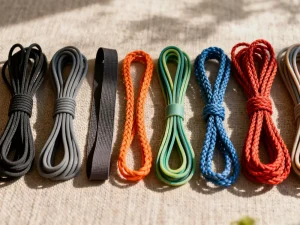
- Color Selection: Another factor you must consider is color. For example, if you are buying elastic cord for clothing, go with neutral shades like black and white. However, for crafts, sportswear, or outdoor gear, bright or patterned cords are ideal options.
- Price & Affordability: Lastly, consider your budget for elastic cords. Remember, high-quality elastic cords made with strong fibers and protective coatings may cost more. However, I consider them reliable for long-term use as they don’t deteriorate. Cheaper options may lose elasticity quickly or break under stress. But if you are buying for light duties, you can choose these cheap elastic cords.
Conclusion
Elastic cords may look simple, but they play a crucial role in our daily lives. You can find them in your bags, shoes, clothes, and face masks. Their ability to stretch and restore after releasing is what makes them functional and comfortable. However, when it comes to the material and manufacturing process of elastic cords, people seem confused.
That’s why in this article, I have covered how they are made and which materials are commonly used. The step-by-step process shows how elastic cords actually gain their elasticity and durability. However, when choosing the right elastic cords, I recommend that you understand your project’s needs. Evaluate their size, strength, material, and color, and then make a final selection.