Have you ever thought what elastic bands are made of and how they get their stretch? The secret lies in a combination of materials and smart manufacturing. Actually, elastic bands are the everyday items you can find in clothes, hair ties, and medical supplies. Their ability to stretch and return to shape makes them useful in countless ways.
To achieve the balance of flexibility and strength, elastic bands undergo strict manufacturing. Also, they are made using specialised materials to ensure durability. Curious how elastic bands are made and with what materials? Worry not! In this article, I will discuss the materials used and the manufacturing process of elastic bands. So, let’s get started!
What are Elastic Bands Made of? Common Materials!
Elastic bands can be made from a variety of natural and synthetic materials. However, the material you use depends on where and how the band will be used. Let’s discuss some common materials used to make elastic bands.
1- Natural Rubber (Latex)

Natural rubber, often called latex, is a traditional material used to make elastic bands. It comes naturally, directly from the rubber tree. What makes natural rubber so special is its excellent elasticity. It means it can stretch a lot and still return to its original shape without breaking. This is due to the unique structure of its molecules, which act like tiny springs.
When stretched, these molecules straighten out. However, when released, they coil back, pulling the material to its original size. In addition to flexibility, natural rubber is also known for its smooth texture and durability. It can handle constant stretching and twisting without losing its shape. That’s why rubber is considered the top material for making elastic bands.
Quick Highlight: Natural rubber contains latex. This is the material that often causes allergic reactions in people with sensitive skin. That’s why manufacturers usually develop synthetic alternatives such as silicon or neoprene.
2- Synthetic Rubber (Latex-Free)
Synthetic rubber is an artificial alternative to natural rubber. It is manufactured in laboratories using chemical processes instead of tree latex. As I said above, the latex in natural rubber can cause allergic reactions in some people. That’s why synthetic rubber was developed to overcome some of natural rubber’s weaknesses.
What makes synthetic rubber so valuable is its resistance to harsh conditions. Unlike natural rubber, it can withstand high temperatures, sunlight (UV rays), oils, and chemicals. It also stays flexible in both hot and cold weather. That’s why manufacturers use it for making bungee elastic bands. Synthetic rubber can be customized in strength, color, and flexibility to suit specific products.
3- Spandex (Lycra or Elastane)
Spandex, also known by brand names like Lycra or Elastane, is a synthetic fiber. It is famous for its extraordinary stretch and recovery ability. Unlike rubber, spandex is a lightweight, soft, and flexible fabric material. Even spandex can stretch up to five times its original length and still return to its original shape without losing strength.
This makes it the most important material used in clothing and textile-based elastic bands. One thing I love about spandex is its resistance to sweat, body oils, and lotions. Unlike natural rubber, spandex does not degrade when exposed to those chemicals. However, spandex alone is not usually used to make elastic bands. It is often blended with other materials, such as nylon or polyester, to enhance strength and durability.
4- Polyester
Polyester is one of the most widely used synthetic fibers worldwide. However, it plays an essential role in producing strong, durable elastic bands. It is made from petroleum-based chemicals through a process called polymerization. In elastic bands, polyester is often used as a covering material or blended with rubber or spandex.
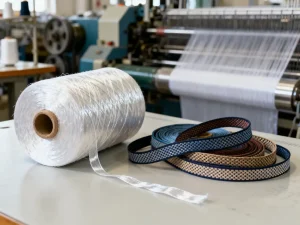
This combination provides both strength and stretch. HOW? Actually, rubber or spandex provides the band with elasticity. However, the polyester adds firmness and durability. One of the main advantages of polyester is its resistance to wear and tear. It can handle frequent stretching, washing, and exposure to sunlight without weakening or fading.
5- Nylon
Nylon is another popular synthetic material used to produce elastic bands. It is known for being strong, lightweight, and resistant to damage. Nylon was the first synthetic fiber ever made. It was created through a chemical process that combines carbon-based compounds. The result is a rigid, flexible polymer that can be spun into thin, durable fibers.
What makes nylon especially well-suited for elastic bands is its high tensile strength. It can handle heavy stretching and pulling without breaking. Yet, it doesn’t stretch as much as spandex, but it provides firmness and excellent recovery. Due to this balance of strength and flexibility, nylon is often blended with other materials. Moreover, nylon is used to make the outer covering of elastic bands.
6- Cotton and Other Natural Fibers
Cotton and other natural fibers, such as jute, silk, and wool, are sometimes used to make elastic bands. Cotton, in particular, is one of the most loved materials. WHY? Because it’s natural, breathable, and comfortable. It comes from the cotton plant and is spun into soft threads that can be woven or knitted with elastic.
What makes cotton stand out is its moisture-absorbing nature. It allows air to pass through, which helps keep the skin dry and comfortable even during long wear. This property makes cotton-blend elastics ideal for waistbands, underwear, and medical products. Other natural fibers, like wool or silk, are less common in the production of elastic bands. However, these materials can be used for the elastic bands of luxury or specialty garments.
How Are Elastic Bands Manufactured? Step-by-Step Process
We’ve discussed the materials that give elastic bands their stretch. But how do these materials come together to form the final product? Let’s find out the answer through a detailed, step-by-step process of making elastic bands.
Step 1: Material Preparation
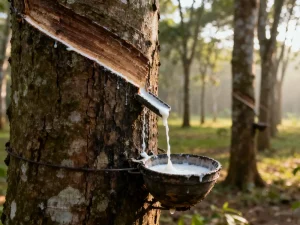
The first and most crucial step in making elastic bands is preparing the raw materials. This step ensures that the material used in production is clean, pure, and ready for processing. So, how to prepare the chosen material? Let’s suppose manufacturers are making rubber elastic bands. For this, the process begins with collecting latex from rubber trees.
The latex is first filtered to remove dirt or impurities. Next, manufacturers prepare various additives to improve the performance of the base material. These additives might include sulfur, color pigments, plasticizers, and stabilizers. Each one serves a purpose. For example, sulfur helps the rubber set properly while stabilizers protect the material from heat and sunlight.
Step 2: Mixing and Extrusion
Once the raw materials are prepared, the next stage is mixing and extrusion. In this step, all the key ingredients come together to form a consistent, stretchy base. In this phase, the prepared materials are carefully mixed using large industrial mixers. These mixers combine the base material with additives such as sulfur, pigments, and stabilizers.
After mixing, the rubber compound is fed into an extruder. The extruder uses heat and pressure to push the rubber through a small die or opening. This shapes the material into thin, continuous sheets or long cords. The shape depends on the type of elastic being made. The extrusion process helps to align the rubber molecules.
Step 3: Vulcanization & Cooling
After mixing and extrusion, the next step is vulcanization and cooling. This stage is where the elastic band truly gains its stretch, strength, and durability. How? Actually, vulcanization is a heating process that alters the structure of rubber and other elastic polymers. During this process, the extruded rubber sheets or cords are heated to controlled temperatures (140°C to 180°C).
But heating or vulcanization takes place in the presence of sulfur. Why? The sulfur reacts with the rubber molecules, forming strong cross-links between them. These cross-links act as bridges, holding the material together while still allowing it to stretch and return to its shape. Once vulcanization is complete, the material is gradually cooled. This cooling locks the new structure of the rubber.
The cooling process usually involves passing the elastic through cold air or water baths. This helps solidify the material and stabilize its final properties. This rapid cooling also prevents the bands from shrinking or warping. After cooling, the elastic sheets or cords are dried and checked for any surface defects.
Step 4: Weaving or Braiding
Once the rubber is vulcanized, the next stage is weaving or braiding. This is where the elastic starts to take its final form, e.g, a flat band or a round cord. In simple terms, weaving or braiding means interlacing threads or strands. It combines elastic threads (rubber) with non-elastic yarns (cotton and polyester). But do these two processes actually work?
If the elastic is made through weaving, machines interlace the threads in a crisscross pattern. This method usually produces flat, smooth, durable elastic bands, perfect for waistbands. On the other hand, braiding involves twisting or plaiting multiple strands around a core thread. This process produces round or tubular elastic bands. Cloth trim manufacturers primarily use braided elastics for their excellent stretch and flexibility.
Step 5: Finishing and Quality Testing
The final step in making high-quality elastic bands is finishing and quality testing. This stage ensures that the bands not only look good but also meet all the strength and stretch requirements. How? Actually, once the elastic has been woven or braided, it is washed and dried. After that, the elastic band is heat-set to stabilize its shape.
Heat-setting involves gently reheating the elastic to make sure it holds its size and stretch. Now it comes to finishing. In the final step, elastic bands undergo special surface treatments. Those include coating with a soft finish or dyeing to give them color and texture. Once the finishing work is complete, the elastic bands undergo rigorous quality testing. In this phase, the manufacturer checks its tensile strength, stretchability, and durability.
Conclusion
Elastic bands are one of the most used daily essentials. They are found everywhere, from your casual clothes and bags to shoes and gym wear. Elastic bands are known for their incredible elasticity, flexibility, and strength. The reason for their elasticity lies in the materials and manufacturing process, which I have discussed in this article.
Elastic bands are made with a variety of materials. Those include rubber, spandex, polyester, nylon, and cotton. But each of these materials has unique properties that make elastic bands suitable for specific jobs. Moreover, the manufacturing of elastic bands is also carefully handled step by step. As a result, you get a piece of stretchy material that is comfortable, flexible, and practical.