Garment elastic bands are one of the most essential parts of almost all clothing. Even though they are small and often unnoticed, they play a key role in making a garment comfortable. How? Actually, elastic bands offer flexibility and allow clothes to fit body shapes perfectly. That’s why you can find them in every garment, like waistbands and cuffs, in sportswear and lingerie.
However, if you are an apparel manufacturer, choosing the right garment elastic band is very crucial. The type, quality, and material of the elastic band will directly affect the comfort of your garment. Hence, in this article, I will discuss everything about garment elastic bands, from their type to specifications. So let’s get started.
Overview of Garment Elastic Bands

Garment elastic bands are flexible strips made from specific elastic materials, such as rubber or polyester. These materials give the elastic band stretchability. As a result, the elastic band can stretch and return to its original shape. This flexibility and stretchability help the garment fit any body size and shape.
So, basically, the primary purpose of elastic bands is to give clothing greater flexibility and ease of movement. They can stretch to the maximum and return to their original shape when needed. Without the elastic band, the cloth will not fit the body properly and will feel loose or stiff. That’s why elastic garment bands are found in almost every type of clothing.
For example, in sportswear and gymwear, these elastic bands provide easy movement during workouts. Also, elastic bands in medical garments and face masks feel comfortable. Moreover, the garment elastic bands are made from skin-friendly materials such as spandex. So, even for sensitive skin or children, these elastic bands are the best choice.
Types of Garment Elastic Bands
You must know that there are several types of garment elastic bands. Each of those types has unique properties suited for different clothing needs. So let’s dive in and explore the main types of garment elastic, along with their specifications.
1- Woven Garment Elastic Band

It is one of the most common garment elastic bands. As the name suggests, woven elastic bands are made by interlacing threads together in a tight weave. This process gives the band a firm, strong structure with less stretch.
This low flexibility is beneficial as it can withstand frequent pulling and tension without losing its strength. That’s why I recommend the woven elastic for the garments that need to be held stable and secure, like straps and waistbands. However, for sensitive skin or children, it may feel stiff and harsh.
2- Knitted Garment Elastic Bands
Another type you will find in the garment elastic is knitted elastic bands. Unlike woven bands, these elastic bands are made by interlooping threads in a knitted pattern. This knitting gives the elastic band a softer feel and greater stretch. It feels very gentle on the skin, which is why it is used in clothing that comes into contact with sensitive areas, such as waistbands and cuffs.
Also, the knitted elastic can be stretched in many directions without losing its shape. So you can use it for making various complex garment designs. However, as I said, it is soft and stretchy, and it can roll or twist if you do not sew it properly in a fabric case.
3- Braided Garment Elastic Bands
Braided elastic bands have different patterns, made by weaving threads together in a braid-like pattern. This braided pattern is slightly stiff and cannot stretch as much as a knitted elastic band. That’s why this elastic type holds clothes in place very well, has a good grip, and does not loosen easily.
Braided elastic bands also do not easily roll or twist and are lightweight. So you can use them in straps, suspenders, ribbons, or narrow waistbands. It is easy to sew these elastic bands, and they maintain their shape for a long time, even with repeated use and washing.
4- Rubber Core Garment Elastic Bands
Rubber-core elastic bands are very different from the above types. How? Actually, they are made by placing a strong rubber or latex thread in the center and covering it with fabric. This design makes these elastic bands both flexible and strong. The rubber or latex allows you to stretch them repeatedly without losing shape.
However, the fabric prevents the rubber from breaking down with repeated washing or from losing flexibility. That’s why you can find rubber-core elastics in sportswear, leggings, and swimwear. However, since it contains rubber or latex, it may not be suitable for people with latex allergies.
5- Foam Garment Elastic Bands
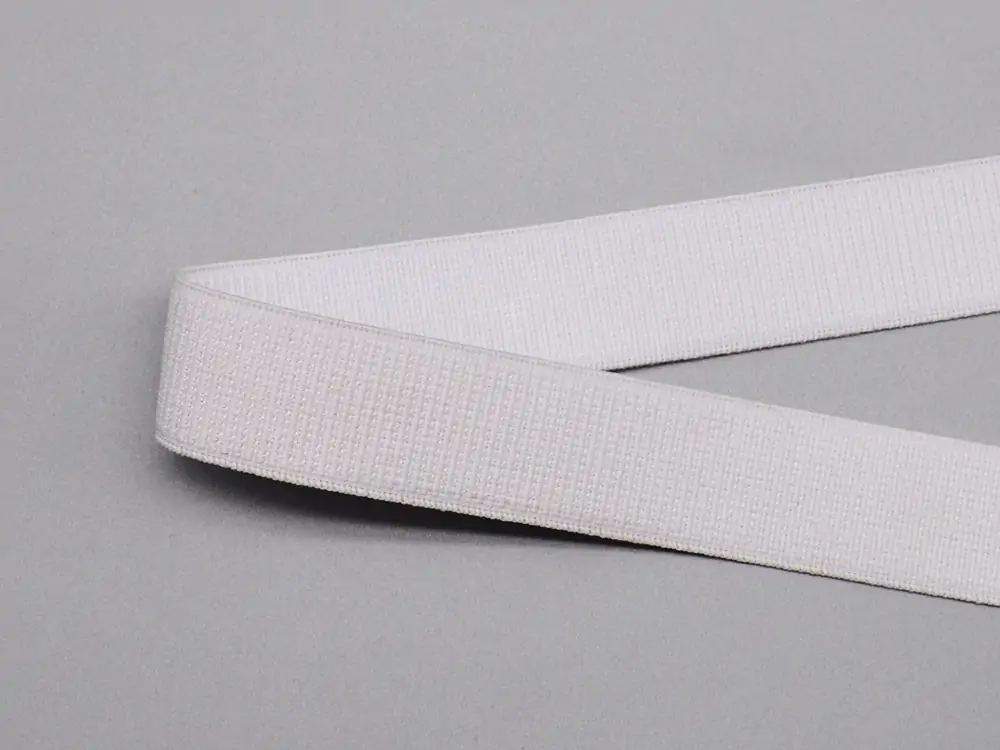
Another special type of garment elastic band is foam elastic. This type of elastic is basically designed to give a cushioned feel. These elastic bands contain latex or rubber inside. However, on the outside of elastic bands, there is a cover of foam, usually polyurethane. This foam cover makes the elastic thicker, softer, and spongier.
Also, the foam helps garments maintain their shape without digging into the skin. Sometimes, the foam is further covered with a fabric to enhance its durability. So overall, you can choose foam garment elastic bands for lingerie, bras, shapewear, or padded clothing.
Specifications of Garment Elastic Bands
As you can see from the above section, there is a variety of garment elastic bands. When selecting elastic bands, certain specifications must be considered. These factors determine the performance and suitability of elastic bands for your garments.
1- Material & Quality
In the specifications of garment elastic bands, the first thing is the material and quality. As I said above, elastic can be made from natural rubber, latex, or synthetic rubber (polyester, nylon, or spandex). Natural rubber and latex are highly stretchable, durable, and strong. So you can consider them where the garment needs more hold. On the flip side, synthetic fibers are resistant to moisture, chemicals, and heat but might be less flexible.
2- Width & Thickness
Elastic bands come in different widths, usually ranging from 3 mm to 100 mm or more. Among them, the narrow elastic (3–10mm) can be used for ribbons, lingerie, and small garments. Medium elastic (10–25mm) is suitable for pants, skirts, and sleeves. However, the wide elastic (25–100mm) is best for heavy waistbands and sportswear.
3- Stretchability & Flexibility
Stretchability refers to an elastic’s ability to extend and return to its original length. Each garment elastic has different stretchability. For example, some elastics stretch 50%, while others can stretch over 200%. The elastic with low stretch (50–80%) is suitable for belts and straps. Medium stretch (100–150%) is ideal for general waistbands. However, high stretch (200%+) is suitable for sportswear and medical garments.
3- Color & Finish
Color and finish refer to how the elastic band looks on the outside. Elastic bands are available in many colors, such as white, black, and beige. You can also customize the garment’s elastic color to match your garment’s shade. Additionally, the garment elastic bands come in various finishes, from matte to shiny. There are also elastic bands with printed designs or logos that you can use in sportswear.
4- Durability & Resistance
Lastly, durability and resistance are also part of the specifications for the garment elastic band. Durability refers to how well a band lasts when used regularly. A durable elastic band can be stretched many times without breaking or losing its shape. However, a well-resistant elastic band can withstand washing, heat, moisture, and daily wear. You can also choose a specific resistance, such as heat or wash, based on your garment’s needs.
How to Source Garment Elastic Bands for Apparel Manufacturing
Sourcing the garment elastic bands is of utmost importance, like choosing the right type. Why? Because it directly affects the quality, comfort, and durability of your garments. So let’s discuss step by step how, as an apparel manufacturer, you can source a garment elastic band.
- Identify Your Needs: Before buying elastic bands, you must clearly understand what you need for your garments. For example, you should know the right type, thickness, stretch, and color of the elastic band. Knowing all these factors in advance helps avoid buying the wrong elastic.
- Find Reliable Suppliers: After identifying your needs, the next step is finding a supplier. In the market, you will find hundreds of elastic band suppliers. But you should go with the one that delivers consistent quality, meets deadlines, and communicates clearly. You can find reliable suppliers through online marketplaces.
- Request Samples: Once you have chosen a supplier, request samples before placing a bulk order. Samples let you test the elastic’s stretch, softness, strength, and recovery, and address issues earlier. You can also check how the elastic feels on the skin and how it looks when sewn into the garment. All this pre-testing helps you make informed decisions.
- Check Pricing & MOQ: When sourcing elastic bands, check the MOQ and pricing. MOQ (Minimum Order Quantity) helps you determine whether the supplier can handle your order. Also, compare prices across different suppliers and ensure there are no hidden charges.
- Quality Assurance: Quality assurance means that the elastic bands meet your required standards. For this, you have to check durability, stretch recovery, and color consistency. Even if you have selected the supplier, regular checks are crucial. It helps ensure that every batch maintains consistent quality.
Conclusion
Garment elastic bands are an overlooked but essential part of modern clothing. They hold the garments in place and help them fit the body size properly. However, not all garment elastic bands are the same. They come in various shapes, colors, sizes, and types, as discussed in this article.
Moreover, there are also specifications for elastic bands. For example, each elastic band has a specific width, color, finish, thickness, and stretch. You have to choose the right elastic based on these specifications. Lastly, the sourcing of garment elastic bands is also critical. For this, you have to understand your needs, assess quality, and choose a reliable supplier.