When you start sewing clothes, a small thing like the elastic width can confuse you. These might seem like very small details, but they matter a lot for ultimate comfort. For example, if an elastic is too thin for the waistband, it might dig into your skin. However, an elastic that is too wide can feel bulky and uncomfortable. That’s why the question arises: What width elastic for the waistband, and how do you choose the right width? If you are also searching for it, you have come to the right place. In this guide, I will explain some basic elastic widths and help you choose the right width for your waistband. So let’s get started.
Why Does Elastic Width Matter?
Before you choose the right elastic cord width, you must know why it actually matters. So here are some reasons that clearly justify the importance of elastic width.
- Comfort & Feel on the Body: Elastic sits directly on your waist. Right? That’s why its width greatly affects how it feels on your body. If you choose the wrong elastic width, it might be too tight or too loose, making the entire outfit uncomfortable.
- Support & Hold: As you know, the elastic waistband keeps your garment in place. If its width is not according to your waist, it will not provide enough support, especially for heavier fabrics. As a result, the waistband may slide down as you move.
- Overall Appearance & Style: The width of the elastic waistband also affects your overall style. This becomes even more critical when the elastic is visible on your garment design. If you choose elastic that’s too wide or too thin, it will not look structured; it will look out of style.
- Fit & Movement: Lastly, the right width of elastic also helps you move comfortably. Suppose the elastic is too thin, it twists inside the waistband. This will hurt your body, and you will feel uncomfortable during movement.
Common Elastic Widths & Their Uses
You have a basic understanding of why the right width of elastic clothing bands matters for the waistband, right? Now, know that elastic bands come in some standard widths from which you have to choose the right one. So before we start choosing the right width, let’s discuss some common elastic widths and their uses.
1- ¼ Inch Elastic (Very Thin)
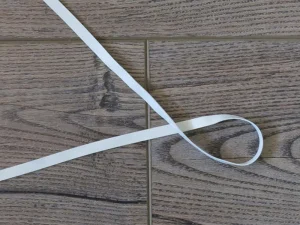
This is the thinnest elastic width. Due to such a thin width, it is very soft, delicate, and flexible. That’s why you can often see and use it in small sections of clothing rather than full waistbands. For example, in baby clothes, sleeve edges, lingerie, or face masks, ¼ inch elastic fits perfectly.
2- ½ Inch Elastic (Thin)
This elastic is slightly wider than ¼ inch. But still, it offers a softness with slightly more strength. That’s why this elastic width is the best choice for lightweight garments that don’t require much support. For example, you can use ½ inch elastic in pajamas, light skirts, and children’s clothing. However, for heavy garments, it might not provide enough strength.
3- ¾ Inch Elastic
When you want a middle-width option, ¾ is the perfect option. It is neither too thin nor too wide, making it easy to handle, especially if you are a beginner. It provides better support than thinner elastics but still feels soft against the body. You can use it for casual skirts, simple waistbands, and lightweight everyday wear.
4- 1 & 1.5 Inch Elastic
These two elastic widths come in a wider range. This means they spread pressure more evenly around the waist. That’s why it feels strong while still providing enough strength to hold garments. The wide elastic also helps prevent the waistband from digging into the skin and stays flat without rolling when you move. So you can usually use it in lounge wear, sportswear, and medium-weight fabrics.
5- 2 Inch Elastic
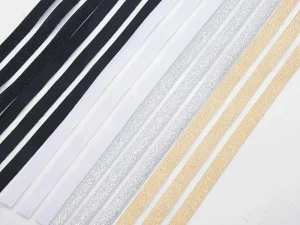
Finally, there are 2-inch elastic bands. This is almost the maximum width that you will find in elastic bands. When you need maximum support and a bold look, a 2-inch elastic waistband is best. You will often see it in high-waisted skirts, trousers, and activewear. Why? Because such garments create a smooth, modern waistband and are very comfortable, as they do not concentrate pressure in one area. However, if you use this wider elastic in lightweight fabrics, it feels bulky.
How to Choose the Right Elastic Width?: Key Factors to Consider
Are you now familiar with the standard widths of elastic for waistbands? If so, choosing the right elastic width from the options is the main task. It might feel tricky at first, but you need not worry! In this section, I will discuss factors you should consider when choosing the right elastic width.
1- Fabric Type & Weight
The first thing to look at is your fabric type and its weight. Why? Because different fabrics need different levels of support. Suppose your fabric is light (like cotton lawn, chiffon, or soft rayon), then it does not need strong elastic. So you can choose ¾-inch or ½-inch elastic. Using wider elastic here can make the waistband feel bulky and stiff.
Similarly, if your fabric is medium (like linen or polyester blends), you need something balanced. For such fabrics, around 1 inch is usually enough. However, if you need elastic for heavy and decorated garments like denim, wool, or thick cotton, thin elastic is not a good choice. It will stretch too much and will not hold the garment properly. In this case, a wider elastic (1.5 to 2 inches) is better.
2- Type of Garment You Are Making
Secondly, when choosing the right elastic for the waistband, consider the type of garment you are making. Remember, not all clothes need the same type of waistband. The purpose of the garment matters a lot. How? Let’s suppose you are choosing the elastic for relaxed clothing like pajamas or casual skirts. For these clothes, you will not need very strong elastic.
So you can go for thin to medium-width elastic (½ to ¾ inches). However, for pants, trousers, or fitted skirts, you need stronger support that holds them for the whole day. Hence, you must choose wider elastic, such as 1 inch. Likewise, for activewear or sportswear, the waistband should stay secure even during movement. That’s why, for this type of garment, you must choose a 2-inch-wide elastic band.
3- Comfort & Personal Preference
Comfort is one of the most important factors when choosing the elastic width for waistbands. Even if the garment looks good, it won’t feel comfortable if the elastic is uncomfortable. Usually, if you are choosing elastic for daily wear, like trousers and shirts, a thin elastic might feel tight. It often twists around the waist, which can cause skin irritation.
Some people find it uncomfortable after wearing it for a long time. If you are also one of them, you should go for wider elastic bands. They spread pressure across a larger area and are more comfortable, especially if you sit, walk, or move a lot. However, your personal preferences also matter when it comes to the width you prefer. That’s why I recommend always testing the elastic on your waist before sewing.
4- Waistband Style (Hidden or Exposed)
The style of your waistband also affects your choice of the elastic width. Are you making a casing waistband (where the elastic is hidden inside the fabric)? In such cases, choose an elastic that easily fits inside the casing. Usually, casing medium widths like ¾ inch or 1 inch work best.
Now, if you are using exposed elastic (where the elastic is visible), the width becomes part of the design. So you have to be more conscious about choosing the right width. Generally, for exposed areas, wider elastic bands look better because they create a clean and stylish finish.
5- Size of the Waistband Area
After all the above, the width of the waistband itself also matters a lot while choosing the elastic width. It is the space where the elastic will actually sit. So you have to choose the elastic width according to that waistband size. For example, if your waistband is narrow (small height), you must use thin elastic (like ½ inch or ¾ inch).
If you try to force a wide elastic, it will fold or bunch up. On the flip side, if your waistband is wide (more height, like 2–3 inches), you should use wider elastic (1 inch or more). If you use thin elastic here, it will move around inside and might twist.
6- Stretch Strength & Quality
Lastly, while choosing the elastic width, you also have to consider the stretch and quality. Usually, thin elastic, like ¼- and ½-inch widths, is softer and stretches easily. So you can choose thin elastic for lightweight, loose, and strong fabric. However, this stretchability often makes it lose its shape over time.
That’s why it might not suit heavy garments well. Likewise, the thick elastic is often very strong, providing more holding support and less stretch. So it works best for heavy garments that need strong support. Besides stretch, you must also ensure that whatever width you choose, the materials used in the garment’s elastic must be of high quality.
Frequently Asked Questions
Does elastic width affect durability?
Yes. A wider elastic is usually more durable. The reason is that it spreads stress over a larger area and keeps its stretch longer. However, thin elastic wears out faster and may lose shape more quickly.
Does elastic shrink after washing?
Elastic shrinkage usually depends on its quality. Generally, good-quality elastic does not truly shrink after washing. However, it can lose or change its stretch over time if exposed to heat, strong detergents, and repeated washing.
Can I cut the elastic shorter for a tighter fit?
Yes, you can cut the elastic shorter for a tighter fit, but be careful. If you cut it too short, it can feel uncomfortable and too tight on the waist. That’s why I suggest testing its fit first before sewing it permanently.
Conclusion
Let’s conclude: Elastic waistbands are the most essential piece of any garment. However, when it comes to choosing the right width of elastic for waistbands, many get confused and feel it is tricky. But in reality, it’s most important to choose the right elastic width. The right width ensures your comfort, style, and overall appearance.
That’s why, in this guide, I have discussed a few standard elastic widths and the factors you should consider when choosing one. As a beginner, you don’t need to overcomplicate things. Just match the elastic width to your fabric, waistband size, garment type, and use, and lastly, your comfort. Also, you should test your elastic before sewing to ensure it is secure and comfortable.